Showing posts with label reading Book Spotlight Writing Social Studies. Show all posts

Monday, April 25, 2022

Titanic in the Classroom


It's been a while since I have studied the Titanic with my classroom, but it is always a hit and something they enjoy. This year I decided to add it back into my curriculum. I pulled a lot of ideas from Teaching With a Mountain View. Her blog is amazing and full of inspiration! I am not sure what it is about the Titanic, even more than a hundred years later, students are still touched by this story. 

Titanic Reading

My first thought when planning this unit was to create a reading-heavy unit that also tied in other subject areas. I sat down to look for different book ideas for my readers. Since I have third through fifth graders, I decided to go with different books based on the needs of the readers. I settled on three different titles and split the students into groups based on those. These are the three books I settled on.


I loved that all of my readers could access this story no matter how high or low their level. They could all feel a part of the real learning we were doing. We practiced all sorts of reading strategies with these books. 

While learning about the same topic, it was important to me that all students, no matter their level, were able to feel apart of the whole class conversations about the historic event of the sinking of the Titanic. As we learned, we dug deep into the story through strategies like determining importance, inferring, making connections, visualizing, and numerous others.

Titanic Social Studies

As we went dove into social studies through the frame of the Titanic, we were able to study class in the early 1900's students were surprised to find that the classes were separated and that the classes had so much distance between them. We watched videos and read books that all pointed this out. We enjoyed trying out a third class tea and on our final day with the Titanic, we saw the huge discrepancy when we had a first class tea. We talked about etiquette and how the tables were set. They were shocked over all the different pieces of silverware a first class meal required. 


We also read books and learned about the human spirit. How people gave up their place on a lifeboat for others, how the ship officers went down with the ship, how the orchestra played until the ship's final moments. We heard about how the lifeboats could hear people calling for help, but how most were too afraid for their own safety to go back and rescue those freezing to death in the icy water. 

Titanic Science

In science, we did a few activities. One of the activities was to become boat builders ourselves and engineer boats that could safely float while holding a heavy load. It was interesting to see the various boat designs that the students came up with. We noticed that the flat-bottomed boats seemed to work the best, especially those that had a very large, flat bottom.  

Another experiment we did was to freeze a water balloon to create an iceberg. Students were surprised when we popped the balloon and dropped the icy ball into the water to simulate an iceberg. They were shocked at how little peeked above the water and how much was below it. This helped them understand the important conversations about how the iceberg that was hit by the Titanic was so dangerous. Most of the iceberg could not even be seen.  

Titanic Writing

To connect writing, we did some subject/predicate poems. These were super powerful to me and easy for the kids. We practiced writing a poem together on the board. We chose the topic of playground and then wrote a bunch of subjects, or nouns, on the whiteboard. Afterwards, we went back through and gave each noun a predicate, or action verb. Then I read one of the Titanic poems that I had found so they could have the idea of how you could turn the poem into a story using two-word phrases. The results were amazing, and heartbreaking. 

Here are a couple of examples from my class. 

1
Titanic leaving
People cheering
Pool splashing
1st Class relaxing
2nd Class playing
3rd class immigrating
Lookout seeing
Passengers snoring
Iceberg hitting
Travelers rushing
Lifeboats going
Unsinkable sinking


#2
People swimming
Dining room stunning
Guards guarding
Maids cleaning
Boat bumped
Iceberg hits
People wondering
Swimming stops
People shake
Compartments fill
Water spills
Kids scream
Babies wail
Lifeboats fill
Lifeboats lower
Titanic snaps
Titanic sinks
Lives lost
People crying
Titanic passes
Titanic gone

I love how they turned out!

Titanic Class Projects

For a project, I sent instructions home with students about a month in advance. They were to create a diorama showing one part of the story of the Titanic. They had to write about the scene they chose and why they picked that one, and be ready to present it to the class. Originally, I scheduled the Titanic project presentations for April 15, the day the people were rescued, but I unknowingly scheduled it on Good Friday, which we had off. So We rescheduled it for April 19, our first day back from Easter break.

The students wowed me with their projects. Even many of the students who do not have much help at home came with beautiful versions of their chosen scenes. They were so proud to share and it was great to see their artistry. We created a small museum of projects down the hallway leading to our classroom so others passing by could also view the projects.


Sunday, February 6, 2022

9 People to Feature during Black History Month in your Classroom


There are so many people, both well-known and not as well-known, that are both amazing and perfect to study with your classroom. During this black history month, here is a list of 9 of those people to bring into the classroom. My students will be studying these people and doing a simple biography about one of them. I have done this same project with kids from second grade through fourth grade and the difference is on the amount of writing the students do. I cannot wait to get started again this year.

Let's start with the well-known people:

First up is of course Martin Luther King Jr. If you have ever taught, I am sure you have taught about his man. Everyone knows about his dream for America...how he wanted all people to be able to be judged by their insides and not on the color of their skin. He spent his life working to end racism and help all people be treated equally. He protested, but he found ways to do it peacefully. He is one of the black leaders at the forefront every single black history month.


Next is Rosa Parks. She is almost as famous as Martin Luther King Jr. himself. Rosa was famous for refusing to give up her seat on the bus. It was the start of the Montgomery bus boycott. 


Bessie Coleman was another amazing black woman who was also a pilot. She had to work hard for the right to reach her dream and became the first black American to have a pilot's license. 


Harriet Tubman is one of my favorites. She was nicknamed Moses because while she could have just saved herself, she didn't. She continued to rescue other people who were enslaved. She is likened to the Biblical Moses who saved his people from slavery. She was brave and strong and selfless. 


Now for some of the lesser known people who were still just as amazing:

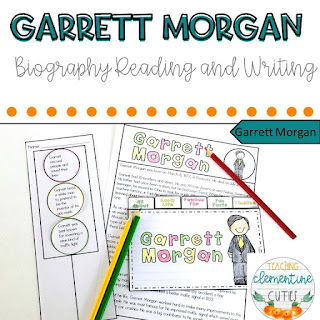
The first one is Garrett Morgan. Garrett was an amazing inventor who did not get all the credit he deserved. Some of his inventions were credited to another person because black people could not hold patents. He was willing to allow someone else to get credit so the inventions could be of help to others. He made traffic lights better and saved many people's lives in the process. 


Dr. Charles Drew was a hard-working black doctor who worked to figure out a way to save blood that was needed for injured people. Before his time, transfusions were done from one person directly into another person. He was able to save it so hospitals could have a blood bank to draw from. Also, he is the father of the modern bloodmobile. 


Did you know that the very first open heart surgery was performed by a black surgeon? Dr. Daniel Hale Williams did that in 1893 without any of the modern conveniences of medicine today. He saved the patient's life. He also was not allowed to practice medicine at the white hospitals of the day so he opened a hospital that kept an interracial staff and was willing to help all people. 


Lydia Newman was a black inventor. She holds the first patent for a hairbrush with synthetic bristles. This hairbrush was better suited to detangle hair, especially that of African Americans. The bristles were stiffer than those made of animal hairs. The brush she invented was also easier to clean and more sanitary. She also worked hard to get voting rights for women. 


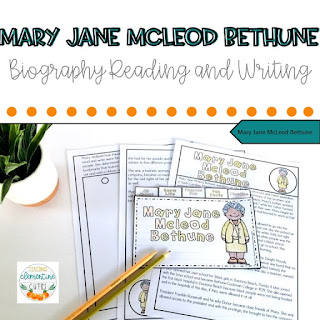
Mary McLeod Bethune was an educator. She opened one of the very first schools for African American girls. She also worked with some presidents to help with civil rights for African Americans. 


These are just, of course, a few of the many men and women of color who have helped to make our country great. Who will you choose to bring to life in your classroom? 

Check out my black history resources if you are interested. You can find these individually or in a complete bundle. Click below to be taken to each resource.


Thursday, June 17, 2021

Book Spotlight: Sincerely, Emerson

Have you seen the new book Sincerely, Emerson? This is the perfect read aloud for your classroom. This book tells the true story of Emerson Weber. She loved to write letters. She wrote lots of letters to many different people, but she had never stopped to consider the people who make it all possible until one day. For the first time, she thought about her postman, Doug, and how day after day he came to her house and picked up her letters and passed them on until they were delivered to the person they were for. She realized that she had never officially thanked Doug for his work and decided to do something about it. She wrote Doug a letter, although at the time, she did not even know his name. She decorated that letter and stuck it out in the mailbox to wait for Doug. 

When Doug found her letter, things quickly changed for Emerson. She realized the power of appreciation and how important all the workers around us are. We each have a part, like a network, in our communities and world. 

It is am amazing book that shows the power of being thankful and kindness. It shows how important each person is in connecting our world. I loved it so much I purchased a copy and went to work scouring it for learning I could bring into my classroom. I divided it up into six different categories that I will use for my classroom.

Sincerely, Emerson: Reading Comprehension

Of course reading comprehension can be taught with any book. In this book, I plan to have students use inference skills and well as text evidence to answer questions. Students will also use questioning skills to create their own questions about the story and write them on a cootie catcher (i.e. fortune teller) that they can use to quiz a friend. 


Simply, Emerson: Figurative Language: Idioms

The second skill we will work on using this book is figurative language, specifically idioms. Students will examine an idiom together that is found in the book and will use that as a springboard into looking at other idioms. Last, students will connect back to one of the themes of the book, mail, by looking up idioms that have to do with mail or the postal service.


Simply, Emerson: Non-Fiction Article: Timeline

After that, my students will read a non-fiction article about stamps. In the article, they will discover that long ago people could send mail without a stamp and the person receiving it would pay a small fee for accepting the letter. They will learn about how stamps came to be and also how collectable stamps came on the scene. I will then have my students create a timeline showing the history of stamps. Afterward, they will get a chance to imagine their own stamp and design it. 

Simply, Emerson: Friendly Letters

I want my students to know how to write a friendly letter even though letters are not as commonly used any longer. I feel it is important for them to be able to compose a letter, using standard form. I will talk with my students about the five parts of a friendly letter. We will go over the heading, greeting, body, closing, and signature to figure out what each part is. Students will brainstorm people to whom we could send letters, like Emerson, to show our appreciation. Then I will have each student choose one person, from the community, to write. I will encourage them to write their letter using some of the same ideas that Emerson includes in hers, stories, jokes, questions, etc. We will mail them out and see if we get any responses...which is also very exciting to get. 

Simply, Emerson: Editing Addresses

While reading and learning about mail, we will also focus on the standard that asks students to use proper form when writing an address. I will pass out a large envelope filled with addressed letter sheets. Students will learn about where commas and capitals go. They will then examine each address to make sure it is written correctly.


Simply, Emerson: City Research

To close our study of this book, we will think about the many exciting places that letters travel that we have never been to. Each student will decided on a city that they want to learn more about. I will have students create a travel brochure for the city of their choice. Students will then share in small groups and the brochures will be on display for all students to look at.


It may be surprising that one little book can teach so much, but it can. From social-emotional learning (kindness and thankfulness), to reading comprehension (inference and finding evidence), from studying non-fiction and timelines, to writing letters and editing address, and even learning more about different cities around us. This book has so many different topics that can be brought in, reading, writing, and social studies. It is amazing what one little book can do.

If you would like to save yourself some time and be able to do some or all of these activities, you can click on the picture below to see my resource. But even if you do not snag this resource, I hope you will love this book as much as I did.