
Spending time in nature is actually an antidote to stress. It is proven that nature can reduce stress and feelings of anger or anxiety. It can even lower your blood pressure and give you a dose of the feel good chemicals that bring about happiness.
Nature is great for me, but as a teacher, I also want that benefit for my studets. Some of the ways nature specifically benefits students is increased attention, self-regulation, fitness, calm, creativity, and even more. If we know that nature has this effect, how can we change things to get kids out there more often?
The average kid spends between 6-9 hours in front of a screen each day. Screen time has the opposite effect of nature. Kids are less focused, more impulsive, more likely to be overweight, and less creative. So if we know better, why is it that we do not do better? I think it really comes down to the fact that parents are busy, teachers are busy, and neither one has the time to figure out activities to connect the kids with nature.
I'd like to share some simple activities that can be done at home or school that will help get kids out into the wild enjoying the great outdoors a little more.
First, let's look at some books about nature. These books can be used with younger kids because they have beautiful illustrations, but I was really trying to focus on kids that were a bit older, like upper elementary. The thing I liked about these books, that made them a good fit to also use in upper elementary is that they have some more advanced vocabulary that you could introduce to the children. I put a picture and a brief description of each book down below. Good books can help build interest in a topic, in this case, nature, so they are very helpful in that way. After we check out a few books, we'll look at some activities that you can do as well.

This book features a 37 line poem that serves as a "nest" for 160 other poems found within the 37 lines.

This book tells the true story of Margaret Lowman who, as a child, was obsessed with leaves. She turned her love of leaves into her career later in life when she became a female scientist exploring the very top of the rainforest.

This is the true story of an entomologist. Back when girls were not suppose to have any interest in bugs, Evelyn fell in love with them, eventually working with insects at the London Zoo.

Charles Henry Turner had an inquisitive mind. Even though he lived long ago during the time of ratial predjudice, he did not let that stop his love of learning. He went on to become the first black entomologist.

Introducing kids to books about nature can increase their awarness and love for it. I love these books because a few of them focus on jobs that are quite unusual, but have something to do with nature.
Now for the activities. There are lots of ways to make being in nature enjoyable. First, let's look at how to spice up an ordinary hike or walk. Lots of families take walks, and if we're honest, lots of kids complain that they have to go. So, why not add some activities along the way? One great way is to have the kids do a scavenger hunt. It keeps them engaged and helps them have a purpose during the walk. Another fun twist you could do would be to let them create their own scavenger hunt along the way and use it later or trade with another child. Try giving children a camera instead of a checklist for added excitement. Kids love to take pictures and document what they see.

Another activity you can do is to have children collect little pieces of nature in a lunch bag. After the walk is over, have them lay the items out and take a picture of everything arranged on a large paper. Turn it into a seek and find game. Have them write a list of things to locate in their picture and share with a friend.

How about going on a color walk. Kids could focus on colors while walking. Start by listing out all the colors they want to focus on. As they walk, have them write down anything they see in that color. You could even create color poems or similes afterwards.
Teach kids observation skills using the five senses. Have them look at an object in nature from different perspectives. Look up close, from far away, from the top, from the bottom, from the left, from the right. Draw the item from different vantage points. Have children collect different kids of leaves. Compare and contrast the different leaves. Categorize them. Identify them. Use them to create paint brushes or a crayon rubbing.

Create a simple bird feeder with a pinecone, peanut butter, and bird seed. Observe the different birds that come by. Make a graph of the birds. Do sketches of the birds.
Watch for and observe insects. Draw them in detail.
Play in nature...build a simple fort. Climb a tree or walk on fallen logs. Create a scene from found nature items. Have someone guess what your scene is. It could be from a movie or Bible story, or a scene from a book you are reading....instead of writing about what you visualized, build it.

There are really so many different ways to enjoy nature. Just get your kids out there. Find a way to connect them to nature.

If you would like to check out some resources to help you explore nature with your child or class, click on any of the pictures below.

This resource has 21 different easy to do activities for connecting with nature, including most of the ones mentioned above.
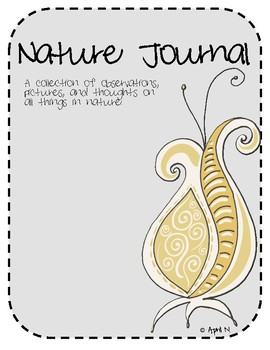
This journal has 10 different pages that can be copied to help students write about and draw observations from nature. It is a true nature journal.


