Showing posts with label Organization. Show all posts

Tuesday, July 28, 2026

Purchases I Made for my Classroom & Professional Development this Summer

If you're anything like me, your wheels are always spinning and the teacher in you never shuts off. That's why every summer I find myself getting inspiration and collecting things from the places I've been and things I've seen. Here's a look at things I have purchased over the past few weeks of summer for my class or for myself (I love teacher books). 


First up is this super cute calculator. I love the colors. I love the tall oversized buttons. And this will eliminate my problem of leaving my calculator at home or at school when I need it most. Now I can leave my old one in one place and my new one in another. And yes, I know my phone can also be a calculator, but I am usually using another screen with a video or music and do not like going back and forth...or my screen turns off causing me to have to log in again, so no, I am not going to use my phone calculator on a regular basis for grading. This ne is just the perfect one for me. 


This summer we traveled to Buffalo Bill's mansion and gravesite. I picked up these arrowheads because I know that we will be learning Native American history and I thought this would get my class excited about their learning. I purchased enough for each child to have one.


At another historic spot, I purchased a little container of fool's gold. This will be great to give out when we learn about the gold rush in social studies. Again, instant buy in. 


Teacher PD books are my downfall. I wanted to learn more about the science of reading. I did a bit of research and found these three books on Amazon. 


A lot of these have been on my wish list and they can be pricy. However, this summer when I dropped my daughter off for college, a bookstore nearby had all of these. Most of them were 75 cents. But a couple were more expensive. None was more than $3.


These are some chapter books I found. We LOVE Andrew Clements and his books. And these were two that I was thinking we did not have. I also picked up this graphic novel to read and see if it was good for my class (it isn't). They LOVE graphic novels. And I picked up the other one to broaden my religious book section (since I teach in a Christian school). 


Last year, I started collecting books, for my math center, that featured different math standards. I found these books at the used bookstore for mostly less than $1.50 each. These will be a great addition. 


I am a paper planner girlie and this one was calling my name. I love the clipboard, the pattern, and inside there is space for 3 daily to-dos and a water drinking tracker, which I am all about right now. 

That's my summer haul so far. I have a few more items on my list for decor, so stay tuned to see my new classroom theme. 


Friday, June 12, 2026

How to Set up Math Centers Before Students Ever Walk Through the Door

Have you ever spent the entire first month of school teaching your class procedures instead of math? With a little preparation before school begins, you can save yourself hours and hours later. You CAN have centers ready before students arrive and you can do it all from your couch while binge-watching your favorite show on Netflix. 

1. Decide on Your Math Center Structure First

Here are some things to think about if you are wondering what structure you want to use.
  • How many centers will your students rotate between?
  • How often will centers rotate?
  • How many students will be in each group?
  • Will centers be independent, teacher-led, or partner based
Here is an example structure that I love to use in my classroom.

I chose these math centers:
1. Independent math: This is a spiral review worksheet & then they could work on a color by math skill page (there are a lot of free ones online...I just search for free color by number 3-digit addition or whatever skill I am focusing on...which is usually a repeat of the skill from the previous unit so they can be more independent and keep reviewing.
2. Online math: This is a math app that we are required to have our students use
3. Grow in math: I used my teacher's aide to have students work on review or extension skills

These are the ones for every day. My students do four centers for 15 minutes each every day. You may be thinking, but that just adds up to 3 centers, and you would be right! (Great math, by the way!) My students have one extra rotation and they will do one of the following math centers every day, but it will be a different one every day Monday-Thursday and we do not do centers on Friday. Here's what they rotate through:

1. Math games: students play math games that focus on a skill from the previous unit if possible
2. Math facts: students will work on math facts through games and/or speed drills
3. Math around the room: math task cards are set up around the room and students love this because they can get up and walk around 
4. Read about math: I love collecting books that tie in to the different units of study in math. Students spend some time reading these stories

Keep your structure simple during the first month as you practice routines.

2. Organize Your Math Center Materials

I have two of those three-drawer  storage units that I use. In one set, I put extra games and the students stay out of that set. In the other set, I place games that they can currently choose from and rotate them from the other set of drawers when it is time to use them. I teach multi-grade, so I have one bin for each grade level and their games are in their drawer. I train them as to which drawer is theirs. If you do not have multi-grades in your class I would suggest a color system for each drawer (for differentiating) and that could be for high learners (extension games), on-level learners, and struggling learners with more remedial games. Or you could use one drawer for each month of the quarter and work ahead and have three months prepped at a time, rotating the games up to the top drawer when it is time to use them (if you are not differentiating).


Make sure that each game includes whatever you need so that you will not be interrupted.
  • Directions
  • All game pieces
  • Answer keys
  • Dice or spinners
Pencils or white board markers

3. Prepare Student Groups Ahead of Time

Some things to consider when getting groups ready are:
  • Student ability level
  • Personalities of your students
  • Behavior needs
Create a list of your groups. Make a rotation chart (this will save your sanity). Have a backup plan if something is not working out. You can just expect that you will have to make adjustments after the first week, once you see how the flow goes and how the students work together. 


4. Create Center Expectations

Be sure to teach your students:
  • Voice levels: This is a time when you should be free to teach small groups and too much noise can be a huge distraction.
  • Movement procedures: When the are rotating between centers, how should they change? Are they going to leave the game scattered or place it back in the drawer? Are they going to walk or run and shove? Trust me when I say, you will need some practice with this, but setting firm expectations is helpful. And, be sure to stick to your expectations, if you let anything slide, it's over...have and keep high expectations.
  • What to do when finished: If a student finishes at their center, what is the expectation? Are they moving automatically to the next one? Should they play that game again? Should they go and chat with a friend or poke them with their pencil? You need to plan for everything. Or your students will do what they want because you did not give them that expectation.
  • How will they ask for help: I would suggest that you train them well so that they have a good idea on how to do the activity and having them work on center work that is one unit behind usually helps them know the skills better, but under no circumstances (ok, maybe if the school is on fire or someone is bleeding profusely) should they interrupt your small group. They need to have another go-to person in the class that they can ask for help. That may be a teacher's aide (if you are one of the lucky ones) or maybe you have a couple of students leaders (these should be your high-achieving math kids so they can actually help in times of need).
Create visuals:
  • Anchor charts can be invaluable tools for helping students remember math processes.
  • Posters of math facts or skills are also helpful.
  • Procedure cards can help students remember what they should do at each center and what to do if they finish up early. A couple of great things for early finishers is having a table out with a puzzle going on it. I like 100, 300, or 500 piece puzzles...building on as the year goes along. You could also use extreme dot-to-dots which go way beyond the 100.
Remember, the most important thing you can do for your sanity, and that of your students', is to practice the expectations and procedures before you expect independence.

5. Build Student Independence

Create systems so that your students will not need you for every single question. Here's some ways you can build that independence your students need to be successful:
  • Make sure your games and activities have direction cards.
  • Have example problems where students can see the process.
  • Use QR codes for directions.
  • Let them get support from other students when they still need more support
The goal for centers is for them to run independently even when you are in small groups.

6. Prepare for Accountability

Students should have some way to show what they are learning. Here are a few ways to successfully do that:
  • Recording sheets can become documented evidence of student learning.
  • Math journals are another way that students can show their thinking and what they know.
  • Exit tickets are a quick way for students to give you one example or explanation.
  • Digital submissions would be a fun way for students to show you their learning.
  • Quick teacher check-ins are more informal, but provide a powerful punch if you can swing it time-wise.
Accountability will help to keep your students focused and provides valuable assessment data for you (don't forget that everything you do should be driven by data to best move kids forward).


7. Start Small

Don't try to launch six or eight centers at once on day one. Instead:
  • Introduce just one center at a time and practice it thoroughly. 
  • Model exactly what you expect and keep those expectations tight.
  • Practice rotations with your students and practice the clean up process. 
  • Reflect and adjust on what is going well and what is not...do not release your students into the center world too early. 
Building your center routines slowly and with intention leads to long-term success.


Conclusion

Successful math centers begin long before the first student arrives at your door on the first day of school. With clear organization, strong procedures, and purposeful planning, your centers can become one of the most productive parts of your math block. 
 
If you are looking for some center games to get your class started, I have so many to choose from, but here are some of our favorites. 

Subtraction Centers

Monday, October 2, 2023

Setting up my Classroom Library

Why do I Need over 1000 Classroom Books?

Having a wide variety and large selection of books is a must for me. Students need to be able to choose books that interest them. They need to have many to choose from, not just a small bin or two for an entire classroom. Having a large variety gets them excited about books. It helps them to be more interested in books. Research shows that students who attend school in a classroom with a well-stocked library of quality books actually read 50% more than students who do not. That is a LOT! Having more books provides students. A great classroom library can benefit students by providing motivation and interest in books. We want to help students become life-long readers and this is one way to help students reach that goal.


Where I shop for Books 

I am constantly adding new books to my classroom library. I love the excitement I see when kids get their hands on new books. There is a buzz in the classroom as everyone eyes a book with an interesting cover that they want to check out. I hear students ask the lucky kid who got the book they wanted if they can have that book next. 

So, where do I find these new books, and how can I afford to add so many to my classroom? I am lucky to have a Goodwill bookstore in my town. It is in entire house, filled with books of all kinds. It has a large children's section and every weekend the books are on sale for 25% off! They are constantly getting new books and I can get so many when I head there. I donate these books to my classroom, but I do write my name in them since I purchase them with my own money. I have no plans to leave my school, but if I ever do, I would definitely take these books with me.

I suggest that you get books at thrift stores and garage sales. I can pick up books for usually between $1.99 and $3.99 plus get the 25% off. These books would regularly retail for between $5.99 and $17 or so. It is really a great deal. Also, don't be afraid to ask or put out a post on social media for people to donate their old books to you for your classroom. I have had parents over the years who wanted to clear out unused books donate to me...and I always say yes to that!

How I Organize my Classroom Library

I admit it, organizing my classroom library was not a quick or easy task, but once I got it organized, it was a cinch to maintain. I have used this method with kids from 2nd grade all the way through 6th and if you train them right, and keep high expectations of them, it is so easy to have a clean and organized library all year, and even for years to come. Here's my steps for getting started.

1. First, find some bins to use. Bins not only allow you to hold more books on the shelf, but it also allows you to easily sort books into categories. Bins also turn books so that students can quickly thumb through them, looking directly at the front of the cover and not the spines. 

Bins do not have to be costly at all. I have two types of bins in my library currently and neither cost much money. The first type I picked up at Walmart. They are the shoebox bins. These usually come in sets of 6 for a discount. I like these bins for chapter books, they are just a perfect size to line chapter books up in and you can store so many in just one bin. The other type I have are dishpan bins. These are larger and they are great to use for picture books that are too big to fit in the shoebox bins. If the books are too large to stack facing out, I do turn them sideways to allow them to fit better. 

Sometimes I get these bins for free when people are getting rid of their storage bins. 

2. Next, I dump all my books out in a large area and start sorting. This is the messiest part and definitely takes the longest, but it is so worth it in the long run. I look at my books and the types of books I have. I start placing books that fit together in stacks. Sometimes I have a ton of books by one author, like Andrew Clements for instance. My students LOVE his books and I have purchased so many over the years. Sometimes I have many books about a certain topic such as the Titanic. We did an in-depth study of the Titanic a couple of years ago and the students became OBSESSED. So whenever I go to the bookstore and see a new book about the Titanic, I pick it up. With all those Titanic books, they needed their own space in my classroom library. I even have books series that obviously belong together. I have space for my Junie B. Jones, American Girl, Childhood of Famous Americans, Ready Freddy, Flat Stanley, Who Was, I Survived, Babysitter Club comics and many more series books. If kids love a series, I keep purchasing them when I see more books in the set. 

If a book does not seem to fit any specific category, then I will use subject area or genre. For instance, I have a category for fiction and biography. I also have a category for science and Bible (since I teach in a Christian school). 

3. Once the HUGE task of sorting is complete, I give each category a name and a number. I start with the number one and continue through the numbers until every category has a number. I purchase little sticker squares, they come in packs at Walmart for just a few dollars. I count how many books I have in a specific category and then I write the category number on that many stickers. I place the number sticker inside the front cover of the book. I continue adding stickers with numbers to the inside cover of every book. As I finish with a category, I place it inside a book bin. 

4. When all the books are in bins, I create tags for the outside of the bins. The tag will show the category and the number of all the books inside. For example it may say Fiction 1 or Biography 3. Many times, I add clipart to my bins to match my classroom theme. I currently have emoji's on my bin labels. I use a plastic pocket sticker on the front of each bin and slide my labels inside. I always pick up extra pocket stickers from the dollar spot at Target during back-to-school time. 


Training the Students to Use the the Classroom Library

During the beginning of the school year, I train the students to use the classroom library. I take time to show them how the books and bins are numbered. I tell them that when they are done with a book, they should place it back according to the number listed on the outside of the bin and inside of the book. I show them how to do this. We talk about the correct way to place the book inside a bin...front cover showing and right side up. I hold them to this. They are not allowed to just dump their books and walk away or put them haphazardly in a bin. Sometimes this takes some reminding and remodeling, but they can and will learn to do it. 


Student Book Bins

Each student in my class receives a book bin with their name on it. I use durable plastic ones. I have had the exact same ones for probably 5-6 years and they are still in good shape. I recommend purchasing ones that are sturdy, not ones from places like Dollar Tree where the size and quality will suffer. I think I originally spent about 60 dollars for 24 bins. I use magazine-style book bins. I also place a plastic pocket on the front of each and slide in the student name. 

We talk about how many books they are allowed to have at a time (5) and how to care for the books by not dog-earing the pages, but instead using a book mark or scrap of paper. 

Students care for their book bin and are asked to keep only books and headphones for reading online inside their bins.


Library Goals

It is a goal for me to have a self-running library with a wide variety of reading materials. I want my students to fall in love with reading and become life-long readers. I will do whatever I can to make my classroom library a place of joy to explore. Being organized, giving students choice, and making the process easy for them are all ways that I go about achieving that goal. 

Setting up your library will take some time, but once you have it, you will save so much time in the long run. I love that I do not have to reshelf books or help students with checking them out. Our library is a well-oiled machine!


If you are looking for editable tags for your classroom library, I have a set you may be interested in in my TPT shop. You can click on the picture below to be taken to the product.


Tuesday, August 2, 2022

Back-to-School and a TPT Sale

Hello Teacher Friends,
I don't know about you, but I am feeling the overwhelm of summer vacation ending and the back-to-shool season beginning. It is a little stressful thinking that in less than a week, I will have my classroom full of students...this week we are gearing up with our teacher planning days and if I am honest, I wasn't ready to say goodbye to the carefree summer days.

Even in the midst of saying goodbye to summer vacation, I am excited to say hello to the TPT sale this week. You cannot beat 25% off. I stocked my cart all summer with my favorite resources so that I can purchase things to help me plan my year. Maybe you are in the same boat. If you are looking for resources to make your year easier, let me show you a few back-to-school goodies that may be a fit for you.

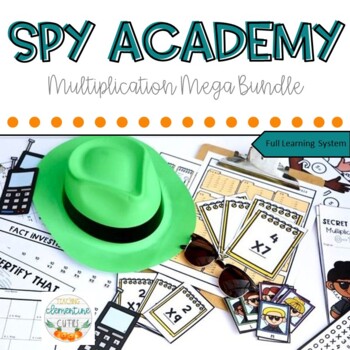
Spy Academy Multiplication Bundle

Want to get your kiddos engaged and excited to learn those multiplication facts? Spy Academy might be just the thing. This is a multiplication learning system designed to help students learn their facts in 12 weeks. That's just one set per week! Students will love the Spy theme and you will love that your students actually WANT to learn. Filled with activities that target different learning styles, flash cards, partner activites, coloring sheets, task cards, and even a spy games, this is sure to be a winner in your classroom.
store post


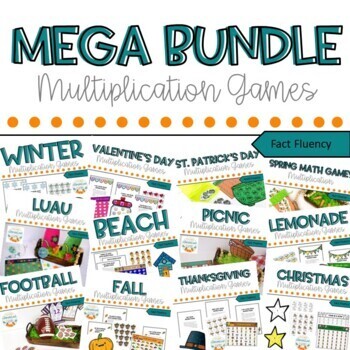
Year-Long Multiplication Centers Bundle

Finding centers that can keep your students learning while you are doing small groups can be a definite challenge. That's why I love these easy-to-prep multiplication centers. You only have to teach the students how to play the three simple games once and then each month they play the same game, but with a different theme. The changing themes keeps them engaged and you have more time to teach. These are perfect for year-round multiplication practice that will be sure to keep your students sharp in their multiplication facts. The best part is that they are differentiated for different ability levels.


store post

First Week of School Resources

This time of year is always hectic with so much to line up for the school year. These activities will help you take some of your time back so you can focus on other things as you prep for the year.

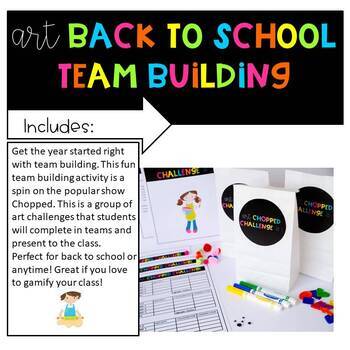
Back-to-School Teambuilding

Team building activities are essential to building community within your classroom in the first weeks of school. I love using this art challenge with my class. Students are placed in groups and each group is given a bag of the same art supplies. The teams are given a theme. They then will use the bag of supplies to create a collaborative art project. Teams will have a certain amount of time to create their art display. If you love the show Chopped, then you will love this. This is a spin on the Chopped challenges, with an art twist and some friendly competition.

store post
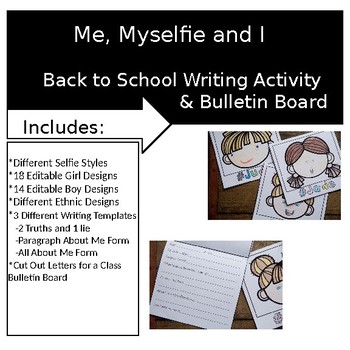
Get-to-Know You & Bulletin Board Activity

Get to know you activities don't have to be boring! I love to use the two truths and a lie activity in my classroom. Students come up with two things about themselves that are true, but could seem like a lie. They come up with a lie that could seem like a truth. The fun comes when each student reads off their list and their classmates try to figure out which is the lie. This comes with a foldable that can become a bulletin board guessing game as well. Students can color their picture and write their statements inside. Then the class can try to guess while enjoying the pictures on the board. There are over 30 different face styles included.


store post

Parent Communication
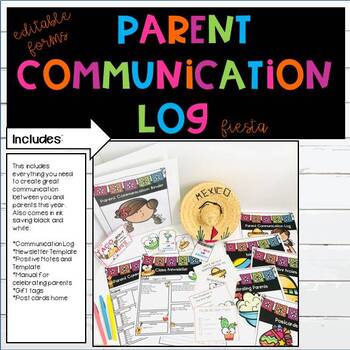
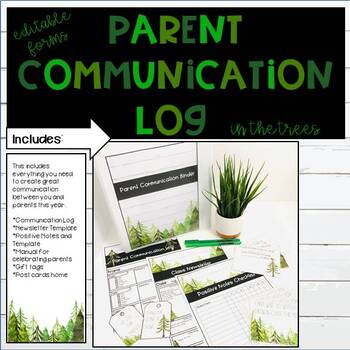
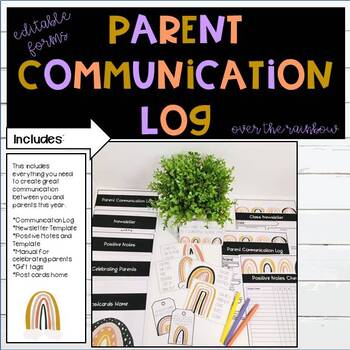
We all know parent communication is important if we want to have a successful year. That's why these binders are so helpful. They make communicating with parents a breeze. From the newletter template to the positivie notes home and the communication logs, these binders are sure to make your life a whole lot easier and keep your parents happy in the process. These come in three different styles with editable forms included.


store post

store post

store post

Classroom Decor

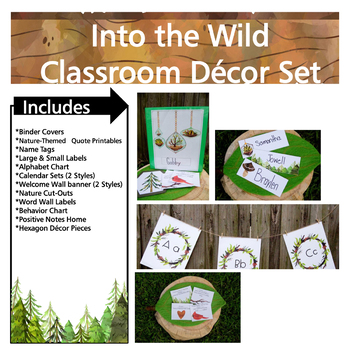
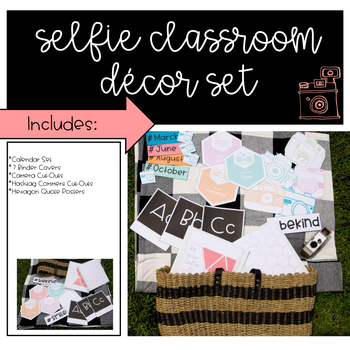
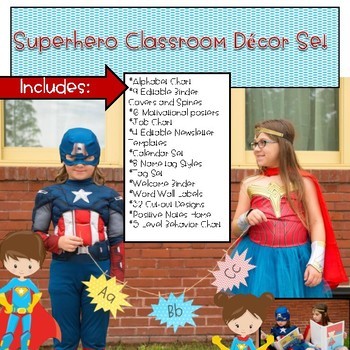
If you are looking for a new look that gives your classroom a little something extra, one of these decor sets may be just the thing for you.


store post


store post


store post

store post

I hope this year is everything you want it to be and more. Have a wonderful school year!

-April