Showing posts with label Black History Month. Show all posts

Monday, February 2, 2026

Meaningful Black History Month Activities for Upper Elementary Students


Black History Month is an important opportunity to move beyond surface-level lessons and help students truly understand the people, stories, and impact of African Americans throughout history. For upper elementary students (grades 3-5), the goal is to balance age-appropriate content with depth, critical thinking, and reflection. 

One of the most effective ways to do this is through Black History comprehension passages paired with reflection activities and biography writing booklets. This combination allows students to read, analyze, and then apply their learning by writing about a famous African Americans in their own words. 


Below you will hear how this approach creates meaningful learning -- and how you can use it in your classroom. 

Why Comprehension + Writing Works for Black History Month

Upper elementary students are developmentally ready to: 

  • Analyze nonfiction text
  • Identify main ideas and key details
  • Reflect on character traits and challenges
  • Make connections between past and present

 Using Black History reading passages grounds students in facts, while writing booklets help them process and synthesize information in a meaningful way. 

This structure supports:
  • Reading comprehension standards
  • Informational writing skills
  • Social studies content knowledge
  • Culturally responsive teaching


Activity 1: Black History Comprehension Passages with Purpose

Start with focused, student-friendly comprehension passages about famous African Americans. Each passage highlights:
  • Early life and background
  • Major accomplishments
  • Obstacles or challenges faced
  • Lasting impact on society

Pair passages with thoughtful questions such as:
  • What challenges did this person overcome?
  • Why is this person remembered today?
  • How did their actions help others?
These questions encourage students to move beyond beyond facts and into critical thinking and discussion. 


Activity 2: Biography Writing Booklets

After reading, responding, and discussing students transition into writing by completing a  biography booklet of their own. This step is key for deeper learning.

A strong upper-elementary biography booklet includes:

  • A title page with the person's name
  • All About
  • Early Life section
  • Famous For (Why this person matters today)
  • Fun Facts
  • Timeline
This structure helps students organize their thoughts while practicing informational writing in a manageable, engaging format.


Activity 3: Student Choice for Deeper Engagement

Whenever possible allow students to choose which famous African American they want to write about. Choice increases motivation and ownership while allowing for differentiation. 

You can:
  • Provide several comprehension passages and let students select one
  • Assign different figures to small groups
  • Rotate passages through literacy centers
This flexibility makes the activities easy to use in whole-group lessons, small groups or independent work. 


Activity 4: Meaningful Reflection (Not Just a Final Product)

To keep Black History Month meaningful, include time for reflection. Encourage students to think about: 

  • How this person's life connects to fairness, perseverance, or leadership 
  • What lessons we can learn today
  • How change can start with one person
These reflections can be written, discussed, or shared in partner conversations.

Why This Works for Teachers

This type of Black History Month resource:

  • Saves prep time
  • Aligns with reading and writing standards
  • Works across multiple grade levels
  • Encourages respectful, meaningful learning
  • Goes beyond crafts or worksheets
Most importantly, it helps students see African American history as an essential part of American history, not a side topic.

Final Thoughts

Using Black History comprehension passages paired with biography writing booklets allows upper elementary students to read, think, write, and reflect in purposeful ways. These activities create lasting understanding while honoring the lives and contributions of famous African Americans. 

When students can explain who someone was, what they accomplished, and why they matter, Black History Month becomes more than a unit --it becomes meaningful learning. 

Ready to make Black History Month meaningful and manageable in your classroom? 

This set of Black History comprehension passages and biography writing booklets gives your upper elementary students the structure they need to read deeply, think critically, and write with purpose --without adding extra prep to your plate. Perfect for grades 3-5 (I have even used it with second graders), these activities work seamlessly for whole-group lessons, small groups, literacy centers, or independent work. 

Click here to grab the resource and bring purposeful Black History learning into your classroom today. 


Save big with the classroom bundle and allow for student choice!

African Americans Included:

  • Martin Luther King Jr. 
  • Lydia Newman
  • Dr. Daniel Hale Williams
  • Bessie Coleman
  • Rosa Parks
  • Mary Jane Mcleod Bethune
  • Dr. Charles Drew
  • Garrett Morgan
  • Harriett Tubman

Your students will build reading and writing skills while honoring the stories and contributions of influential African Americans --and you'll feel confident knowing your lessons go beyond worksheets and truly matter. 


Friday, December 27, 2024

Activities to Use in January

January, the beginning of the second half of the school year, is upon us. Sometimes it can be hard to get back into the swing of things and start again with planning all the things. That's why I wanted to share a few activities that are easy to set up and use during the first part of the new year. 

New Year's Classroom Activities

I know that New Year's Day never happens while we are at school, but I always like finding a way to celebrate it anyway with my students. New Year's is a big deal. It is the perfect time to think about the goals students have had, see how they are going, and set new goals for the rest of the school year. 

Another way I love to get back in the swing of things is by learning about the holiday and the traditions that swirl around it. I enjoy teaching the history behind every holiday with reading passages and extension activities, and this one is no different. 

I created New Year Reading Comprehension Passages and Activities as a way to give my students a knowledge of why we celebrate in the way that we do. It is great to connect reading to social studies too! We read through these passages either as a whole group, or even in small reading groups. Each of the seven passages come with a comprehension worksheet with a few key questions (and there is a teacher's edition included for easy grading). Then, we extend our learning through the use of several activities. One of my favorites are the foldable New Year's ball goal setting craft. It is so cute and would make a great bulletin board display too. There are several other activities too like building a shoebox float. You should definitely check it out here. Of course, I update the dates each year. Although that is not reflected in the picture. (You can click on the picture or caption to be taken to the resource.)

This resource is updated to reflect
the date of each new year. 

Another fun way to start the new year is with a team building art challenge. I LOVE getting my students working creatively in teams. As one of my teachers always says, there's more cabbage in two heads, and that is certainly the case with getting the creative juices flowing. This art challenge is a spin off of the cooking show Chopped. Each group receives a bag of identical supplies. The groups then have a time limit in which to create a masterpiece based on a certain New Year's theme. Projects are then presented to the whole class and points can be awarded (if you want to add to the competition). There are three challenges in this resource. Use one, or use all three and make it like the show. You can use it all on one day, or I like using one challenge a day for three days. It is flexible, so use it however you like.


 Be sure to click the photo to be taken to this fun and engaging resource. 

Black History Month & MLK Jr. Day

Another huge thing to incorporate at this time of year is black history. This is, afterall, black history month, and while it can, and should, be included all year, this is a chance to focus in on the accomplishments and contributions of African Americans. Martin Luther King Jr. Day is also this month, so it is always good to include him in your classroom studies and activities. 

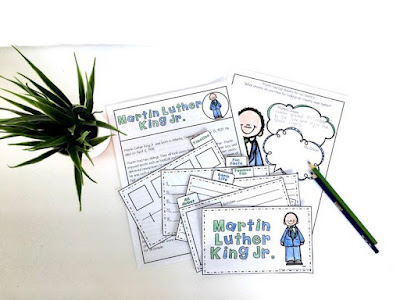
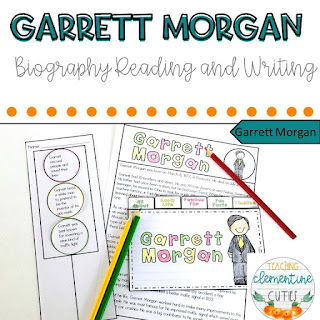
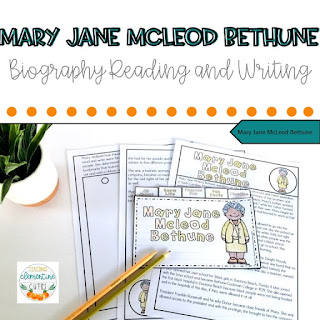
With that in mind, I want my students to learn a little about many different African Americans, both well-known, and lesser-known. I created this resource to celebrate and bring knowledge to students about these important people in our history. Each of the nine people studied in this resource comes with a reading sheet, comprehension activity, and a writing book. Students can read about the individual, test their knowledge by answering some questions, and share their learning by creating a small booklet report to read to others. Each booklet comes with an "all about" section, early life, famous for, fun facts, and timeline. I suggest having different students studying different people and then share with the class. That allows students to learn about more than one student and gives each student the opportunity to become an expert and teach others. 


People included in this resource are:
        Bessie Colman
        Dr. Charles Drew
        Dr. Daniel Hale
        Martin Luther King Jr. 
        Lydia Newman
        Mary Jane Bethune
        Harriett Tubman
        Rosa Parks
        Garrett Morgan

Click either picture to be taken to this resource. 

I hope this helps you plan some exciting learning activities for the new year and month of January.

Be sure to check out these blog posts to find out more ways in incorporate these special holidays into your classroom. 

Sunday, February 6, 2022

9 People to Feature during Black History Month in your Classroom


There are so many people, both well-known and not as well-known, that are both amazing and perfect to study with your classroom. During this black history month, here is a list of 9 of those people to bring into the classroom. My students will be studying these people and doing a simple biography about one of them. I have done this same project with kids from second grade through fourth grade and the difference is on the amount of writing the students do. I cannot wait to get started again this year.

Let's start with the well-known people:

First up is of course Martin Luther King Jr. If you have ever taught, I am sure you have taught about his man. Everyone knows about his dream for America...how he wanted all people to be able to be judged by their insides and not on the color of their skin. He spent his life working to end racism and help all people be treated equally. He protested, but he found ways to do it peacefully. He is one of the black leaders at the forefront every single black history month.


Next is Rosa Parks. She is almost as famous as Martin Luther King Jr. himself. Rosa was famous for refusing to give up her seat on the bus. It was the start of the Montgomery bus boycott. 


Bessie Coleman was another amazing black woman who was also a pilot. She had to work hard for the right to reach her dream and became the first black American to have a pilot's license. 


Harriet Tubman is one of my favorites. She was nicknamed Moses because while she could have just saved herself, she didn't. She continued to rescue other people who were enslaved. She is likened to the Biblical Moses who saved his people from slavery. She was brave and strong and selfless. 


Now for some of the lesser known people who were still just as amazing:

The first one is Garrett Morgan. Garrett was an amazing inventor who did not get all the credit he deserved. Some of his inventions were credited to another person because black people could not hold patents. He was willing to allow someone else to get credit so the inventions could be of help to others. He made traffic lights better and saved many people's lives in the process. 


Dr. Charles Drew was a hard-working black doctor who worked to figure out a way to save blood that was needed for injured people. Before his time, transfusions were done from one person directly into another person. He was able to save it so hospitals could have a blood bank to draw from. Also, he is the father of the modern bloodmobile. 


Did you know that the very first open heart surgery was performed by a black surgeon? Dr. Daniel Hale Williams did that in 1893 without any of the modern conveniences of medicine today. He saved the patient's life. He also was not allowed to practice medicine at the white hospitals of the day so he opened a hospital that kept an interracial staff and was willing to help all people. 


Lydia Newman was a black inventor. She holds the first patent for a hairbrush with synthetic bristles. This hairbrush was better suited to detangle hair, especially that of African Americans. The bristles were stiffer than those made of animal hairs. The brush she invented was also easier to clean and more sanitary. She also worked hard to get voting rights for women. 


Mary McLeod Bethune was an educator. She opened one of the very first schools for African American girls. She also worked with some presidents to help with civil rights for African Americans. 


These are just, of course, a few of the many men and women of color who have helped to make our country great. Who will you choose to bring to life in your classroom? 

Check out my black history resources if you are interested. You can find these individually or in a complete bundle. Click below to be taken to each resource.


Monday, June 8, 2020

Black-History-Month-in-the-Classroom

I have never really stopped to give much thought to celebrating Black history month in my classroom. It just wasn't something I had really done much before. One of my schools required that we do something and so, out of obligation, I did. However, my views on that are changing.

Last year, I read a book that featured a strong African American girl as the main character. It was a work of fiction. I cannot for the life of me remember the title of that book, but what stands out to me is the reaction of one little girl in my class. She was hanging on EVERY SINGLE WORD. She was memorized. She had found herself in the story. 

My family also took a vacation that allowed us to spend one day in the heart of Montgomery, Alabama, most known for it's place in the civil rights movement. This was home to Martin Luther King Jr., Rosa Parks, and George Washington Carver also lived nearby. Being the teacher that I am, I brought along some books so that my own children could learn about these people on our road trip. By the time we got there, they had some idea what they stood for and what they had done for their people and really all of us. 

While spending the day in Montgomery, we took a tour of the place where Martin Luther King Jr. lived and even met some of the people who knew him personally. We visited with his neighbor, who was also the babysitter of his children and purchased her book about her experience. This is REAL history. My children were engrossed in history and loving every minute. A spark ignited in my daughter and when someone asks her what her favorite subject is, she will answer with two subjects, one of which is social studies. 

 We stood in the very place where Rosa Parks refused to leave her seat on the bus that day long ago. We walked the street in front of MLK Jr's house where a famous picture was taken of him marching for equal rights, surrounded by many others. We touched the spot on his front porch where a bomb was planted to kill him. It left a permanent mark that has never been fixed. We went to the church where he was a minister. We relived...history that day, imagining in our minds what it all must have been like. 


Thinking back over the experiences I had on that trip and the reaction of one little girl in my class you finally found herself in one of my stories, I realize that I do need to do more. I need to bring stories that can help this group of students identify themselves and the history of their race in America. It just can't be about the main founding fathers that we talk about every year, we need to allow time for other people that were pivotal in our history too. 


You can see some of the other ways I have brought the African American history to life in my classroom. You can see those here, here, and here. 

This year, I will be honoring some of the people who worked to give equal rights to all people. A few years ago, I created a pack of booklets to help my students study famous Americans. I have recently updated some of the booklets to include a printable story that can be used as the research guild for these booklets. I found several books into one set especially for Black History Month. You can find that here. The great thing about these is that they can be used with your students in a whole class activity, as partner work, in centers, or individually.   


Thursday, April 13, 2017

Underground Railroad Simulation

This was the second time I've used this simulation. It's one I picked up from Interact Simulations and I love it. Even though it is geared toward 5th grade and up, I was able to easily do this with my third and fourth graders without changing anything.

Students were divided up into groups to become experts. They then had to learn about a certain topic and prepare a presentation to teach the rest of the class what they had learned. The topics we covered were: Secrets and Dangers of the Underground Railroad, Stories of Escape, Routes of the Underground Railroad, and one about Friends and Agents on the Underground Railroad. 


After presentations were over, I assigned roles for our simulation. Some students were slaves, some were conductors, some were bounty hunters, and some were patrol officers. We had safe houses throughout the school. Students had just a few rules. The most important were that they could not talk, unless they were the conductors, who could whisper, and students could not run until they were ready to run across the field and go to the fence at the back of our property which simulated reaching Canada. 

The salves had to follow the conductor, who had a map of the school. Their job was to collect 3 different colored tickets from 3 safe houses. Once they did that, they could run for Canada. 

The conductors used maps of the school to lead a group of slaves from safe house to safe house and finally to Canada.

The Bounty hunters tried to stop the slaves who were running for Canada. They had to stay in the field area. If a "slave" was caught, they did not reach freedom.

The Patrol officers were scouring the school looking for safe houses. When they found one, they were able to shut it down. 

Students really took to this simulation and were super serious. So serious that one student asked me if they got caught, would they really die? WOW! What a great reminder to take nothing for granted when explaining things to the students. 


Once our simulation was over, we debriefed together under the trees. The students were super respectful of each other and also had a lot to share about their thoughts and experiences. It was so great to see how they connected with this final lesson in our unit. Afterwards, we went inside where they wrote a response paper sharing their thoughts, feelings, and experiences on the Underground Railroad. 

What the students were saying: 
"I saw from just doing this, that slaves had a hard time. I'm glad I'm not a slave and that Harriet Beecher wrote a book and sold a million copies and it made people think, 'Let's get rid of slavery.' "

"I was so happy when we made it to 'Canada' but my sister was in another group so I was scared for her, but she made it. I went to go hug my sister when she made it and we were all happy."

"I was a conductor. I thought they were going to shut down all the stations (safe houses). I was really scared they would catch me and my slaves."

"I was a slave on the Underground Railroad. I felt like I was going to get caught but I did not get caught."

"I felt so, so, so, so, scared because I thought I was going to get caught. I almost fainted because I didn't know (what was going to happen). When I got to 'Canada' I felt like a slave that had reached their goal to be free."

And then the students did something almost unheard of....the asked to do it all again. When students beg to do the same lesson again, you know something went right! Days like this are the absolute best. 


Monday, April 10, 2017

Slavery and the Underground Railroad

We have been working hard to answer the driving question of our PBL unit (project based learning), "Why would someone risk their life to help others?"We are finishing up our research by creating a museum of our learning with six fabulous projects that will be put on display...1. Biography Bottle People: Students are featuring some historical figures that were either slaves or abolitionists. Some of the people they chose are: Harriet Tubman, Harriet Beecher Stowe, and Levi Coffman.
2. Underground Railroad Quilts: Students have discovered the significance behind the quilts used as maps to the underground railroads and also used by abolitionists to signify that their house was a safe house. Students are featuring different quilt squares and the symbolism behind each one.

3. Maps and Important Papers: Students are creating maps of the slave and free states, maps of routes to freedom used by the slaves, and authentic wanted slave posters.
4. Plantation Diorama: Students are creating a diorama of a slave plantation.
5. Model of a Slave Ship: Students are learning about how slaves got here in the first place and what the ships they sailed on were like.6. Safe House: Students are creating a large model of a safe house to show where slaves stayed along the underground railroad.
Bottle People

Quilt Square

Quilt Square