Thursday, June 26, 2025

Summer Series Classroom Transformations Part 3: Linking the Standards


Now we all know that we cannot generally create room transformations just for the fun of it. Yes, the fun is part of the charm and thrill of a good transformation, but it definitely has to have a point. The point to all of this is, going deep with the standards. Students will work hard for you when they are fully engaged…THAT is the point! Teach those tricky standards with a little extra one, two punch…a game, and video, or….A CLASSROOM TRANSFORMATION. Students will be more excited and may not even realize they are learning. Many students do not think of learning as fun, so to them anytime it is fun, it is not learning. The truth is it actually is learning and with this kind of hype, you can take them deeper and push them harder than ever before, because of their mindset. They WANT to learn.

Let’s take a few minutes to walk through three different room transformations and how we insert the learning amongst all that fun.

1.    Titanic Room Transformation

I know that students are fascinated with the history of the Titanic disaster, so I chose to do a unit on this theme with a small transformation at the end. Let’s look at how the curriculum was brought into this theme.

Reading: First and foremost, I decided that our lead-in would be reading groups. I chose books for each of my reading groups as we started our learning. It was important to me that all of my students were involved in this historical event through books, from the lowest reading group to the highest, and everywhere in between.


With the books, we practiced different reading strategies and we had discussions about the events. This is the easy part and you can certainly add in just about any strategy for comprehension including determining importance, making connections, visualizing, and comparing and contrasting.

2.     To connect a writing piece, I had the students write simple subject predicate poems. These are easy for a wide span of ages and student could use them to retell the story of what happened. Here's a look at two of my student examples.

1
Titanic leaving
People cheering
Pool splashing
1st Class relaxing
2nd Class playing
3rd class immigrating
Lookout seeing
Passengers snoring
Iceberg hitting
Travelers rushing
Lifeboats going
Unsinkable sinking


2
People swimming
Dining room stunning
Guards guarding
Maids cleaning
Boat bumped
Iceberg hits
People wondering
Swimming stops
People shake
Compartments fill
Water spills
Kids scream
Babies wail
Lifeboats fill
Lifeboats lower
Titanic snaps
Titanic sinks
Lives lost
People crying
Titanic passes
Titanic gone


3.     For science, we were able to incorporate a few activities. One thing we did was a STEM project where students became boat builders. They had to work together in groups to create boats that could carry heavy loads. Then we tested them out.

We also created an iceberg by filling a water balloon with water and freezing it. Once it was frozen, we removed the balloon, leaving a balloon shape of ice. We dropped it into a container of water and observed how most of the ice was below the surface, while only a little bit was sticking out at the top. I used this to connect students to the hidden danger of icebergs and how most of the ice is lurking below the surface where you cannot see it. It was definitely eye opening.

4.       Students were given a project to make a visual representation of one part of the Titanic story through a diorama. They wrote a short paper about the event that was depicted and why they chose that part of the story. Each student then presented their project in front of the class. And we left them in the school hallway, for a few days, so the other students could enjoy them as well.


5    On the final days of our learning, I hosted two mini transformation/simulations of the afternoon teas. We first experienced a third-class tea, which was, of course, very basic. Then we  had a first-class tea another day. It was fancy and elaborate and students were able to see the discrepancy between the classes.


6.       Glow Day


Usually when I have glow day I go with a multiplication theme. I use it as a way to introduce multiplication to my students (or if this is a new skill for them, I would wait until after we do that unit in our math curriculum) and we do a whole bunch of center activity games to foster a love of learning.


I like to start my students off with a multiplication fact sheet (sometimes multiple fact sheets). But it makes it more fun because they get to use a highlighter and it automatically lights up with a nice glow.


Afterwards, I set out a game called Multiplication Slam on the desks. This is a speed activity that gets students trying to solve facts (of all one set) quickly. Students get one minute to place all the answers on an equation card. Then we rotate desk spots and try again and again so each student gets to do all the fact cards from 1-12.


For the center activities, any game really can work, but adding a little bit of glow is a bonus. I usually give each group about 15 minutes at each station. Here are some ideas of things I have tried in the past.


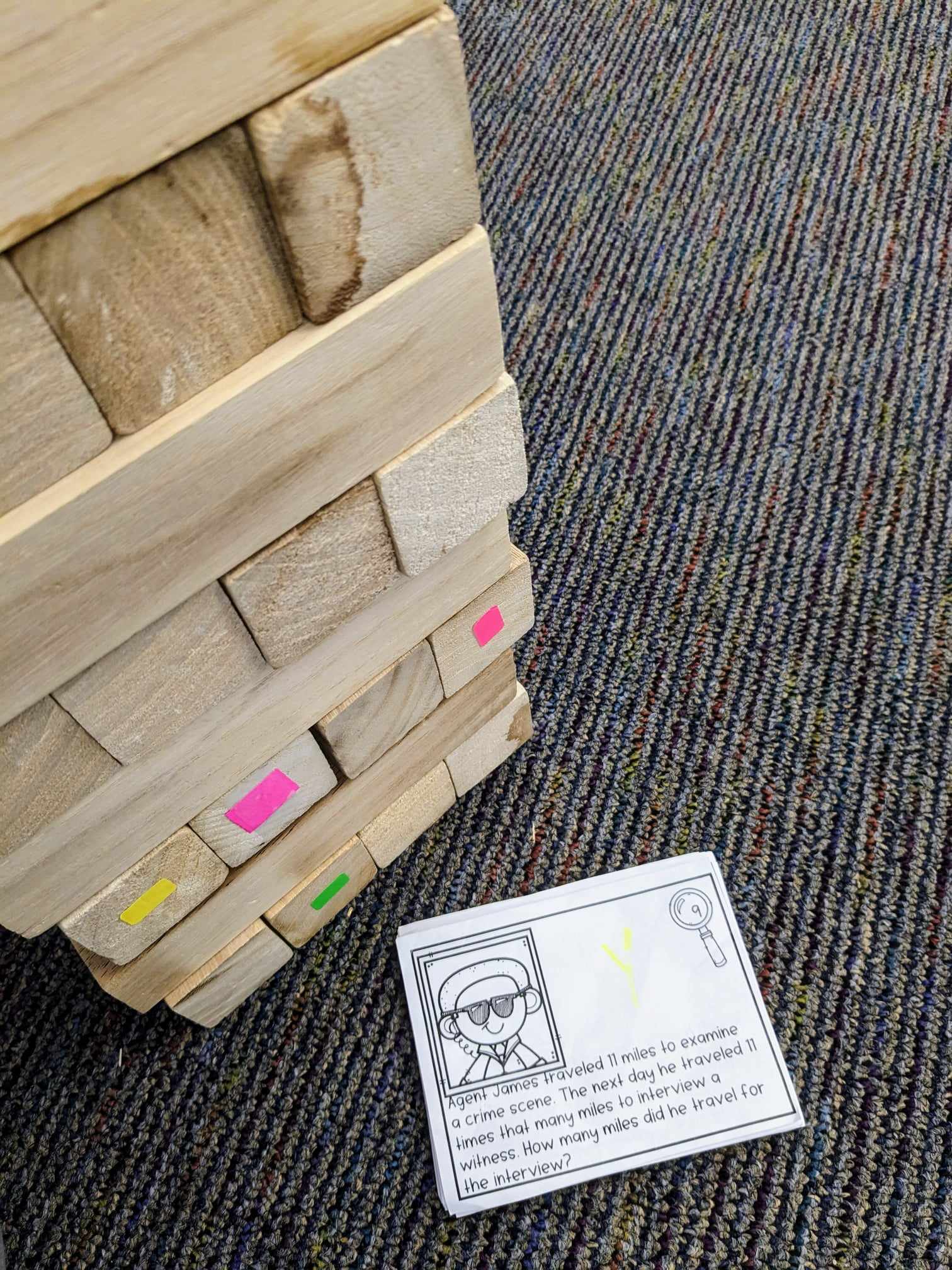
Set up a game of Jenga. I have the extra-large size set, but any size could work. I used neon label stickers on the ends of each piece to create a glowing spot. Then I printed out multiplication task cards on sheets of different colors to match the stickers. Sometimes I use white paper with a colored neon dot in the corner to go with each sticker color. Students mix the stack and turn it upside down. They take turn solving problems and find a piece in the Jenga game to try to remove and place on top. Play continues around until someone knocks over the Jenga tower.
 store post

Another fun way to practice is to get some glow sticks and tape to create a game of tic-tac-toe on the floor. Use two sticks to create an “X” and use the connectors for the glowsticks to make an “O”. At this station, students should divide into two teams. Add some multiplication cards. Teams will draw a card, solve, and play one of their X’s or O’s.


I purchased a neon colored connect four game a while back and I like to bring it out on glow day. All you need to add are a couple of dice (use 12-sided for a more challenging game). The students will divide into two teams and take turns rolling the dice, multiplying the numbers, and then adding a game token into the Connect Four game.


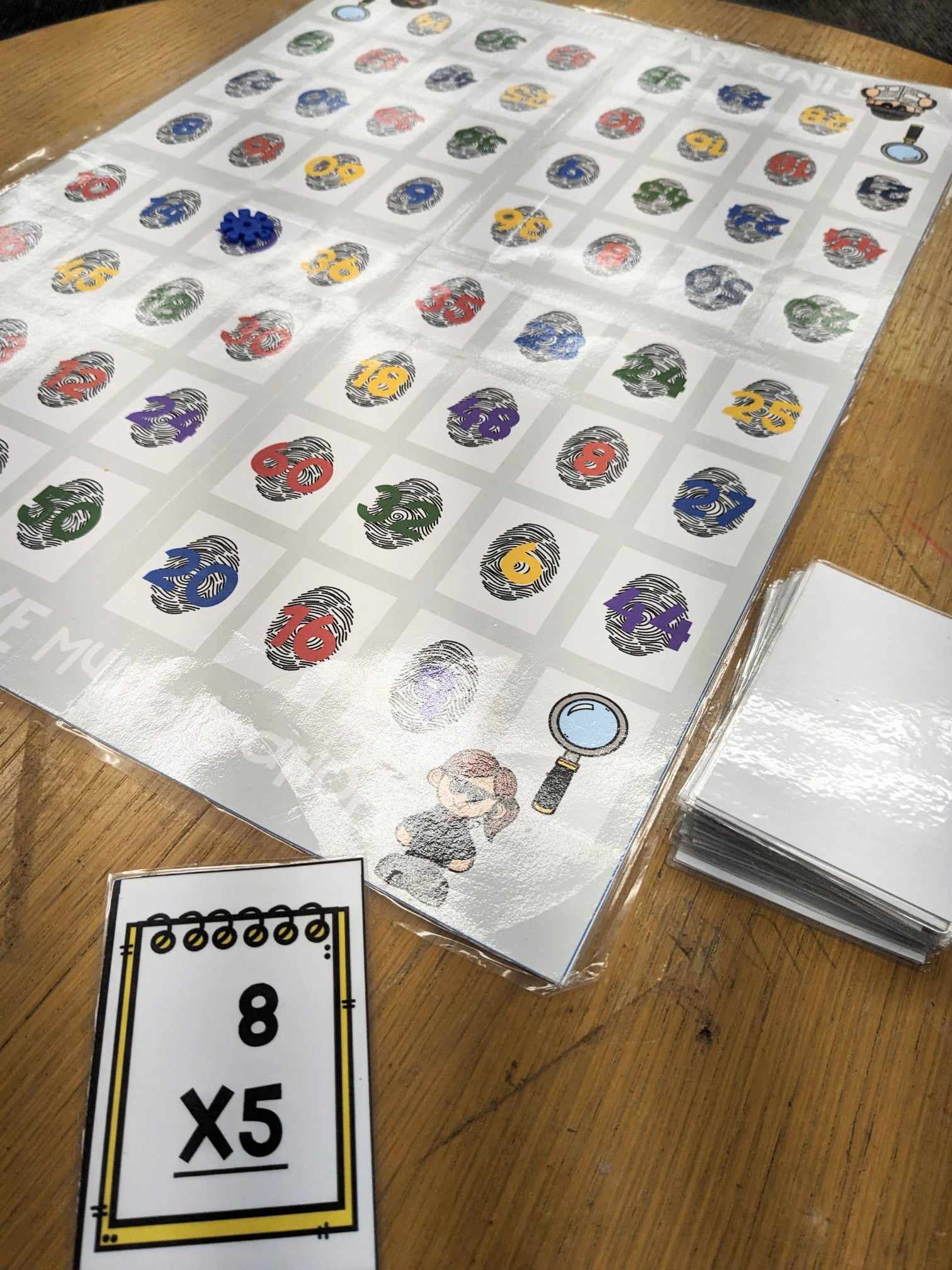
I put out other multiplication games as well such as a mystery game called Find Five. Really, any game can work, and you can create easy glowing games with neon paper cards or glow sticks.
 store post

I usually divide my students up into small groups to play these games. Since I have a smaller class, I usually have about 4 groups. This means I need to come up with at least four game rotations.


Sometimes I will do some reading activities as well. It is fun to find articles on bioluminescence for students to read about. We use little tap lights to illuminate the text and they annotate with highlighters, or they could use sticky notes.


7.       Toy Story

Several years ago, I happened to be at the Ron Clark Academy on a day when Hope King was doing her STEAM Mania Toy Story transformation, so many of these ideas came from her.


One activity that was for math was a “claw Machine”. Students could grab the aliens and solve the math problems. This could work with any math skill you are learning, but it could work for other subjects as well.


We also did an unlock the toys escape room. Students were working to figure out different clues and unlock boxes. In the end they won a prize. Escape rooms are great because they are also usually standards based.


Another activity we have done before is a STEM challenge where students create a parachute for one of those green army guys. They want to create a parachute to help slow down their falling army guy. We drop the guys from a tall place like the top of a slide or climbing structure.


Any STEM activity that involves toys or army could work.


As you can see, it is not hard to find ways to bring your transformation to life with the standards. It just takes a little creativity.

In the next segment, we will be talking all about setting up this transformations. 

Classroom Transformations Part 2: Inspiration

Classroom Transformations Part 1: What are They


Monday, June 23, 2025

Summer Series Classroom Transformations Part 2: Inspiration

In this second edition of my summer series on Classroom Transformations, we will be looking at Inspiration...where to find it, and how I come up with ideas. One of the biggest things people think about when doing classroom transformations is where you find inspiration to do the creative work it takes to dream up classroom transformations. I’m going to share five places I find inspiration.

Classroom Transformations from Student Inspiration

To me, this is the most important form of inspiration and the one that makes the biggest difference. Remember, you are doing all of this for the students…to engage them, so let them dictate your next theme. At the beginning of the year, get to know a bit about your students. Send home an all about my child sheet and let the parents tell you about their child. This should  definitely be something that includes favorites and interests. I also like to give each child their own interest inventory on the first day or week of school. Let them tell you, in their own words, what they are into and what they like. And finally, have students interview each other as a part of the first week of school. Then have them share information about each other in front of the class. While they do this, be sure you are listening and taking notes. Once you have done this things, you will have a list of different things your students LOVE…things like their favorite:

Sports

T.V. Shows

Hobbies

Games

Places

Animals

Etc.

If you notice some of your students love soccer, you may plan a soccer transformation. If they love the game Candy Land, create from that. If dinosaurs are their jam…You know what to do.


Classroom Transformations from Teacher Inspiration

Follow other teachers. Check Instagram and Pinterest. There are some great ideas out there and they are just a click away. Some of my favorite teachers for classroom transformation inspiration are:

Hope King

Tanya from @giftedteacher305

Joanne Miller from @headoverheelsforteaching

You know how teachers can be…we borrow ideas from each other all the time. Don’t be afraid to do it. Your students will think you are the best.

Classroom Transformations from Book Inspiration

Books can be a powerful source of inspiration as well. Are you doing a novel study? Why not celebrate the end with a room transformation? This could even be just a picture book that you base your transformation on. The sky is really the limit here. Here’s a look at two of my book inspiration transformations:

Charlotte’s Web


As we finished up Charlotte’s Web, I wanted to set up the review in a fun way. I did this transformation around Halloween time, so I could find spiders décor and other items at the store. I purchased a fake web and spider and suspended it from the ceiling. I used pipe cleaner to write the words: Some Class in the web. Underneath, I pulled in a table and covered it with a red and white checked tablecloth. This was where I set up the book as well as the escape room pieces and some other décor. This was super easy and used mostly things I already had. The biggest expense was that I went to Dunkin’ Donuts and bought some of their spider donuts. When we finished the escape room, we enjoyed spider donuts as a treat.

The Lion, The Witch, and The Wardrobe

My students absolutely LOVED this book. We dug deep into the spiritual themes behind it as well (I teach in a Christian school). This was one of those books were the students gave a spontaneous round of applause when it was over. They LOVED the book as much as I did. As a final activity to celebrate the book, I turned the room into a little piece of Narnia. When students came up to the classroom, I had taped a sheet of butcher paper that I decorated like the outside of the wardrobe. When students walked in, they had to go through a “closet of coats” that were hanging in the doorway. Then they made it into Narnia. There were snowy Christmas trees at the entrance as well as a light pole with a streetlight on it. On one side of the classroom was a table that I decorated with butcher paper to make it look like an altar. I put a huge stuffed lion on the altar (this was a lion my husband still has from when he was a kid). In the front of the classroom, I displayed a copy of the book on a tall table draped with a white lace tablecloth. I put a crown on the table to represent the white witch and there was a fancy pedestal tray with Turkish delight. I also made marmalade rolls. Both of these were foods mentioned in the book. I purchased a winter scene backdrop that I hung at the front of my room. We did an escape room to review the content of the book. Afterwards, we watched the movie in sections to really examine and compare/contrast with the book. It was amazing! My principal heard about what we were doing and came through to tour Narnia because that is also one of her favorite books.


Classroom Transformations from T.V./Video Game Inspiration

What are kids watching? What video games are they playing? These are always a good place to go to. I have done several transformations based on these sources of inspiration.

Angry Bird

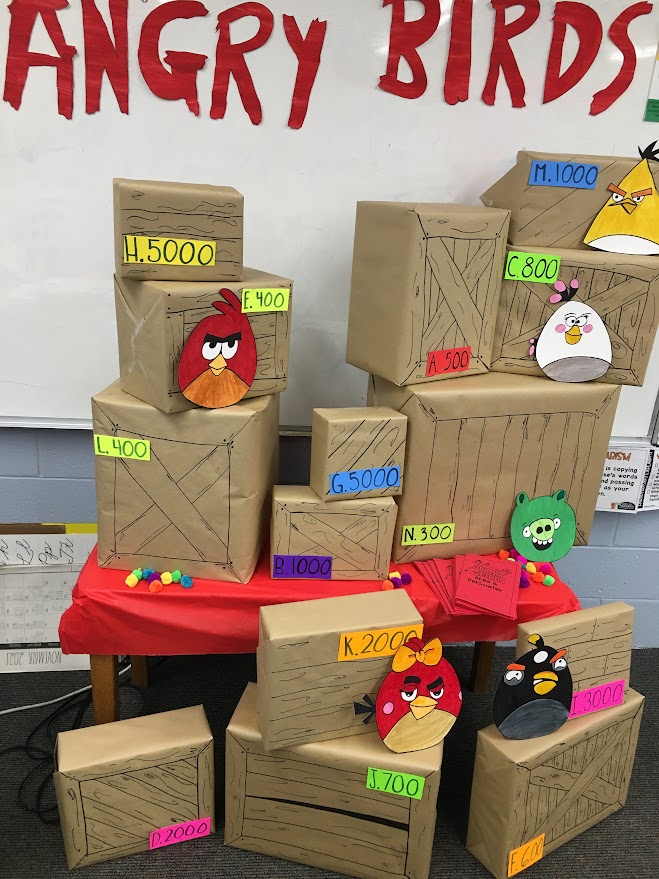
I will admit that I first saw something similar at the Get Your Teach on Conference. The room for my breakout sessions was decorated in an Angry Bird Theme. I also knew that kids love that movie and game, so it was a perfect idea to turn into a transformation. This one was simple and low budget, but took a little time. I collected different boxes of varying sizes. Once I had my boxes, I covered them with kraft paper and used a Sharpie to make them look like wooden crates. Next I placed tags with different numbers on them. These were to be point values for the game we would be playing. I drew and colored some simple Angry bird characters on poster board and cut them out. I also drew and cut out the name Angry Birds to look like the logo. You could use a projector to do all of this if that intimidates you.  Simply project the images and trace them onto poster board. I set up a wall of boxes with the words Angry Birds taped them to my whiteboard. Then I scattered the Angry Bird characters around on the boxes.

This transformation was going to help my students practice some math skills, so I created some colorful cutouts for practicing area and perimeter. I made these from poster board. I made a recording booklet for this, so students could record their answers and  keep score. Lastly, I added pompoms and a sling shot (I already had both).

Students solved a problem, showed me, and if they were correct, used the slingshot to shoot a pompom at the boxes. Whichever box they hit displayed a point value. They would write that in their booklet and then solve the next problem. After solving all the problems, they added their points up and could see what their score was. Total engagement, you all! It was amazing.

The inspiration from Get Your Teach On


Mario

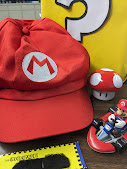
A game, movie, and more inspiration from GYTO…this was one I just had to do. The big splurge I made here was Mario hats. I purchased them on Temu, so it wasn’t too bad, and I will be able to use them time and time again.

I purchased concrete forms and my dad helped me cut them in different sizes and add a ribbing to the top so I could paint them to look like the pipes in Mario. I got a blue background and some large wall stickers that were Mario themed. My dad also made me a flagpole and I printed a Mario flag that students could lower when they completed the challenges. I have not done this every time, but I highly suggest it...I like to hang a question box (yellow paper  covered box that students can punch and break into, just like in the game. I only made one, so the group that got to that challenge first was able to punch the box.    


Classroom Transformations from Store & Restaurant Inspiration

Just take a stroll through stores like Hobby Lobby, and you are sure to find all the inspiration you need. This summer while strolling through,  I found inspiration in a discount display. It was a whole bunch of picnic stuff. Think red and white checked items, ants, and watermelon. I immediately took notice and a picture. A few days later, I went back to get some of the items. This is going to be a great picnic themed transformation that I will be working on creating.


                    Why not host a Starbooks Café theme in your classroom? I like to do this little                            spin off every year on the first cold day. Ask Starbucks to sponsor you                                      by donating cups and treat bags. I turn my classroom into a coffee shop feel and serve hot chocolate and cookies. 

                       To add in the standards for this one, you could do a book tasting, silent reading, or I enjoy doing it as part of a reading marathon. For the reading marathon, students are using a book of their choice, but it should be a new one they have not started. Each student gets a large art paper and we fold it in half long-ways (hotdog style). Then we fold it in thirds  the other day (hamburger style). When we open it, there are six blocks. We outline the blocks and then we are ready. 

                      I set a timer for 10 minutes and students are required to stay busy the entire time. In the first block (top, left) students will create a cover for their book. They must include a picture as well as a Title. They can simply redraw the front of their book, or they could do a new cover design, but should keep the title the same. We alternate our ten minute segments between ten minutes of reading, then a ten minute response activity on one of the blocks. We do activities such drawing & writing a description of one of the characters of their choosing, making connections, writing a summary, drawing and telling about the setting, listing character traits of one of the characters and backing them up with text evidence, creating a scene that was visualized from one of the events, etc. You can choose any reading skill and have the students respond in one of the blocks. I do not allow the students to say, "I'm done." because there's always more details, sketching, or coloring they can add. They can even go back and add more to another block they previously did. We alternate between reading blocks and activity blocks to help the student not get overwhelmed since things are always changing. I saw this idea somewhere years ago and have used it nearly every year since. 

                       As students do their reading marathon, they are able to have a nice warm hot chocolate and some cookies as if they are working at a little coffee shop. 


Inspiration is literally all around you. Just keep your eyes open and remember you can find inspiration in your students' interests, what other teachers are doing, books, tv & games, and stores. Inspiration is everywhere.

                      Be sure to stay tuned for part 3 where we will be talking about how to link the standards into your transformation.  


Thursday, June 19, 2025

Summer Series Classroom Transformations Part 1: What are They?

Welcome to my summer series on classroom transformations. In this first part of the series, we will be looking at what classroom transformations are. For some of you, this may be a completely novel concept and you are wondering just what a classroom transformation is. By the end of this post, you will know, hopefully be inspired to stick around for the rest of the series, and even attempt one of your own this school year. 

What are Classroom Transformations?

Classroom Transformations are a way of teaching that fully engages your students in the content through environment and experience. Think about it this way, if I am learning about Paris, for example, how can I put my students in that environment without booking a red-eye to France? What are the sites, sounds, smells, tastes, and feels of that beautiful city? I will enhance my curriculum to bring in as many of those as possible. I want my students to feel as if they are in France for that day, from greeting them with a "bonjour" at the door in the morning and having French music playing (sounds), to having a photo, background, or even 3D model of the Eiffel Tower as they come into the classroom (sight), I want them to feel as if they have stepped into France. Maybe I have some French pastries to help encourage and reward them during their content learning (taste & smells). Hopefully you get the idea. 

Is there a Purpose to doing this?

Of course there is! It is all about engagement. You want students to learn and to be excited to learn. It makes it easier when they have the desire to learn, and it eliminates behavior problems when they are fully engaged. Transformations are one of the best ways I know to get students to buy-in to the learning they would have to do anyway. Sometimes I hear students beg to go in from recess because what we are doing in class is more fun and exciting than recess itself! That is a win, friends!

Do Classroom Transformations have to be Elaborate?

The simple answer is no. A transformation can be super elaborate, or simple. It can incorporate many of the senses, or just a few. A transformation can take over your entire classroom and day, or be a simple set up in one area or for part of the day. You decide how much you want to put into it. 

Are Classroom Transformations Expensive?

It depends. You can go all out and spend an endless amount of money, if you want to, but that doesn't have to be the case (and for most teachers it shouldn't be). You can easily spend little to no money on them as well. To save money, think about who you could borrow items from. Could you have parents sign up to bring consumable items, such as food? Other teachers, your family, even student families are a great resource for borrowing decor items. You can use cardboard and paint, a cheaper option, to design elements for a classroom transformation. But remember, you can keep it small and not have to put in much work at all. It is amazing what a few one dollar table cloths can do to help you change your tables or desks into a mini transformation. 

Classroom Transformation Examples

Let's look at a few examples right now. You will see that some transformations take little or minimal effort and others can take a lot more time. The great thing is, you decide how much to do or not do. You decide how much to spend or if you are going to spend even one dime. It is totally up to your preference. 

Indiana Jones Archeology Transformation:


When I taught 6th Grade, social studies for the year was all about ancient civilizations. How do we know so much about those civilizations? Through artifacts. How do we find artifacts? Through archeology. So, it was a natural conclusion that we needed to have some hands-on experience with archeology and who better to bring it than Indiana Jones.

This transformation was super simple, but the students were no less excited than if I had gone all out. I put some Indiana Jones music on, borrowed a coat from a friend, used some clay pots and shells and other pieces I already had, and purchased some sand (less than $10), and  a few magazines (Cannot remember the cost, but minimal). I used a container that I already had and filled it with sand. I created a grid like archeologists use and buried one artifact in each section. We used brushes and other art tools to uncover the artifacts. I prepped students to think like archaeologists by telling them things like how artifacts can be fragile. We talked about how artifacts can be hundreds or thousands of years old and could crumble or break easily and discussed ways to keep artifacts from being damaged. Then students took turns becoming archeologists and unearthing artifacts. They were super careful as they uncovered pots and shells and other items from the "past". We looked at all the artifacts and, just like real archeologists, figured out what we could understand about the people that left these things behind. Students were 100% engaged from start to finish with this simple transformation. 

Glow Day Transformation


For Glow day, it was a little more work. First, I purchased some black lights. I got a set of three for probably around $65, but I kept in mind that I would use these repeatedly, and I have used them for probably five years already. This is a transformation I do every year, so I wasn't too worried about the investment. Plus I could use these for other transformations such as space or caving (study on rocks). I also got black plastic to cover the windows to make the classroom pitch black. I purchased a set of class neon spy hats at Dollar Tree and have had them for years as well. We also use glow sticks for games and highlighters to write with.

Usually, I use this transformation to kick off our multiplication unit. Students jump into a full morning of times tables games and activities that all glow and engage them. This is not too hard to set up, but does take more time than the archeology activity. 

Space Transformation


My space transformation was a lot of work to set up and used a lot of supplies. Thankfully, I have a friend who loaned me about 90% of the decor and supplies I needed. I just added in a few space themed activities and the supplies for those, which were minimal. I had to purchase or have on hand things such as yarn, straws, etc. 

This one involved decorating the front of the room, covering the windows to create a dark room, like space, and also putting the black lights up again. This one was of course a hit. I used this near the end of the year to continue learning and bring engagement in a time when engagement is hard to come by. 

Classroom Transformation Wrap up:

This gives you an idea of what classroom transformations are with some pictures to help you visualize how it all comes together. We are going to continue to explore through this summer series on classroom transformations. My hope is that you will find inspiration and ideas to help you set the stage in your own classrooms!

What's next? Here's a quick look at what we will be learning during this series:

Part 3: Linking the Standards (This is not just for fun)
Part 4: Set Up (The hows of transforming your classroom into something magical)
Part 5: Transformation Day (What does this look like...think a day in the life of a classroom transformation) 


Wednesday, June 18, 2025

Teachers on Break


The lazy days of summer are upon us...the days that teachers long for. I am absolutely soaking them up with my two teens and husband. We aren't going anywhere this summer, and that is kind of sad (I love to travel), but it also gives us an opportunity to do things around our town that we didn't get to do last year when we spent six weeks road trippin'. 

So what is a teacher on break supposed to do with all that extra time? Here's some suggestions if you need some ideas.

Dust off your instruments: 


I am spending extra time playing the piano, my first instrument. My goal was two hours a day, which quickly morphed into one, but even on days when my fingers don't dance across the ivories at all, I am taking extra time this summer to better my craft and learn some challenging pieces. 

I am also working to relearn the violin. As an adult, I took lessons for a few years, but that was before children. I have forgotten much that I learned, but I figure I can pick it up quicker the second time. I used to play in our church orchestra, and my husband still does. My goal is to be able to competent enough to play from the hymnal and join him once again. 


Sports:

Get some exercise in a way you don't always get to do during the school year. We got our bikes ready so we can choose to ride around the neighborhood with our kids. We are getting up early and visiting the pickleball courts before things heat up. As another option, we could go to one of the basketball courts in town or even even dunk a few shots in our driveway hoop. Go to the local pool. We have a really great one with an amazing splash secion and two slides for the bigger kids...and best of all, it is free. We are walking more too, and that makes our dog so happy.


Hobbies:

Now is the perfect time for all those hobbies you have abandoned. For me it is scrapbooking and photography. I actually have the time and enrolled in a photography course! Sharpening my skills in that area is so fun. And it has been a minute since I have printed off any pictures to use in my albums. I am happy to get that chance this summer. I have a lot of catching up to do. 

Read:

Take advantage of your local library. Check out some new books. I have been reading a lot, and enjoying it. I don't take the time very often to read a good book during the school year, but I have already finished three and have more that are in the process. Here's some of what I have been reading: 

High Five by Mel Robbins
This one is all about loving yourself
Let them by Mel Robbins
This one is about not worrying how others act and not reacting in negative ways toward the chaos they cause
Loving our Students on Purpose by Bernii Godwin
All about teaching students joyful responsibility for their own behavior
Tiny Habits by BJ Fogg
All about making change in your life with micro habits. 
The Quilter's Apprentice (An Elm Creek Quilts Novel: book 1) by Jennifer Chiaverini
A fiction book about a girl who learns to quilt, with other stories woven in along the way 
Round Robin (An Elm Creek Quilts Novel: book 2) by Jennifer Chiaverini
A fiction book about a group of quilters and their individual stories


Visit Free or Cheap Places

Look around your town for places you can go that don't cost a lot. Some museums have free days, some movie theaters have $1 movies for the summer, and parks are also a great option. Kids can do reading programs at their library and earn prizes such as tickets to local events, etc. 

A summer at home doesn't have to be boring...and it shouldn't be. Get out there are make it memorable with your kids, or even if you don't have kids, do it for yourself!

Thursday, June 5, 2025

Thinking Through my Classroom Management Plans

This year I wanted to work hard on classroom management. A well-managed class makes teaching a pleasure. So...I set about to research and learn more about classroom management. I wanted to brush up my skills and set up a new system for managing my classroom this year. 

Classroom Management Resources

To help myself along, I picked up a couple of old books that I have that have been sitting on my shelves for many years that have been read or partially read and forgotten. Where did my research lead me first, but the guru Harry Wong. Harry Wong's book, The First Days of School is considered a classic in the teaching world and he is at the top when it comes to educators who can manage a classroom. He is the expert! I read through most of his book in just a couple of days, taking notes along the way on things I wanted to remember or try. I also found an old interview by Harry Wong and listened to that. I checked out his website and several articles he had written through the years. There were so many treasures in his materials. 

Another book I read was called, The Classroom Management Secret by Michael Linsin. This book was so great and basically put the problem of classroom management right in the teacher's lap. being inconsistent is the worst thing you can do when upholding classroom behavior in your classroom. It starts to form a hole in your strategy when you do not consistently hold students accountable and students misbehave more and more. 

One last place I looked to was the teacher Mrs Munch's Munchkins on Instagram and YouTube. She is amazing with lots of fresh ideas. 

My Classroom Management Plan for the School Year

This year I took things from all three of these sources, and others, and added my own spin to create an effective plan for my classroom. 

1. First, we spent a ton of time on procedures, and continue to go back over those procedures on a regular basis as needed. 

2. Next, I spent some time on a plan for whole class behaviors, which are basically the expected procedures for how to do needed things together as a class such as our quiet signals and when we line up or come to our class campground/campsite (circle area). 

    Students are expected to follow procedures for line up or going to the campground like this: 
        a. stand up
        b. get ready (either empty hands or bring what is asked of them)
        c. when I give the secret word, students move silently to line, campground, or desks. 

      For our quiet signal, we do two different ones. I might say, "If you hear me clap once!" The students should clap and turn their eyes my way while remaining quiet. The second option I use is used in the same way, but it is a call and response I believe I learned at Get Your Teach on a few years back. It goes, "Hey, Hey, Hey! Listen up, Listen up!" Students shout it back to me while looking and listening. 

For our procedures, we use a whole class scoreboard. If students follow the procedure correctly, we get a point on our scoreboard under the words "Oh YEAH!" Then I will say, "Let me hear it. 1,2,3..." and they say "Oh YEAH!" If one student does not follow but the rest do, I make that one student show me the correct way to do it, but we do not get or lose a point. If several students to do follow the directions, I will give them an oops point and make them practice correctly. At the end of the day, we look at our points and compare the Oh Yeah points to the oops points. If we have more Oh Yeah points, we reveal a mystery letter to a secret prize. When all letters are revealed, the class earns the prize. If we have 5 more Oh Yeah points than Oops points, we reveal two letters. We reveal no letters if students get more Oops points. The prizes are simple things and do not have to cost anything at all. I use things like extra recess, stinky feet (no shoes for the day), bring a stuffed animal, etc. 

I also have a plan for individual management. This is where our classroom rules and consequences come in. First, I taught my students the four simple rules that I call Our Campground Rules (since we have a camping theme).
 
        1. Respect God
        2. Respect Adults
        3. Respect Students
        4. Respect Property

Under each of the rules, we have simple explanations that show what respect looks like in each situation. I also teach at a private Christian school, so we can have a rule about God. 


For the first week, after teaching my rules, I did not enforce consequences. This was a period to get used to these new rules for the year. I would remind students of which rule they broke and what the consequence would be in a few days. As students got used to the rules, I introduced the following consequences:

        1. Warning (verbal warning of the rule broken)
        2. Time Away ( either time away from friends in class or a time out during recess)
        3. Note Home
         4. Principal

While students understand that these are the consequences, they also know that the level of consequence can be skipped if the degree of rule breaking is serious. 

That pretty much sums up my classroom management plan. I do try to communicate with parents and build great communication. If you are interested in getting some ideas for parent communication and making your year run smoother in that aspect, check out that post over here. Here is another fun way to help with behavior management...click here.

Wednesday, June 4, 2025

Five Things I've Learned about Teaching in 27 Years


As a teacher, you are always a student. Learning is never done. I just finished up year number twenty-seven, and teaching has taught me some pretty important lessons through the years. 

1. Teaching is more than just a job. Seriously, teaching is hard, but it is unbelievably rewarding. I have been fortunate to have been able to watch my students through the years as they grow up, graduate, and become adults. And they are truly amazing! You never know how they are going to be as adults (when they are still little), but seeing them all grown up is rewarding. Students come back to you with stories about your class that you had long-since forgotten. They may get taller than you, smarter than you, and make more money than you, but the influence of a great teacher is never forgotten. I have had students write papers about me as their favorite teacher, years after the fact. I have had students come back to our school, walk into my room, and with a huge smile and a hug go down memory lane again with me about the good 'ole days...and remember when. I have parents thank me and students too. Teaching may feel hard in the moment, but the effects are lasting.

2. Teaching is not for the faint of heart. Teaching is work...it is WORK in all caps! But if you aren't afraid of work, then you will be fine. I'm not saying you have to eat, breathe, sleep, and live teaching, but I am saying that you will work harder than many other jobs, and the work never feels done. There are things that will have to wait. Do NOT live at your classroom at the expense of your family. However, to be successful, you will have to put in some extra time above those "contract hours"...and that's OK.

3. Breaks are not just for vacationing, they are for truly allowing you to thrive and survive. Many non-teachers like to point out that teachers work just 180 days a year and have an abundance of breaks in-between. That may be true on paper, but it sure isn't true in reality. Actually, I am contracted from August 1-May 31, so even though we have just 180 days with students, teachers work more than just student contact days. Those breaks however, are a necessity. Teachers go 90 miles a minute while school is in session and they definitely sacrifice some on the self-care front. These sprinkled in breaks allow teachers a small period to recover before hitting it hard again. In my job, I am it. No specials, no planning period, no free time to eat lunch in the staff lounge. I am with my students from the time they arrive at 7:30 to the time they either leave or start aftercare at 3:15. I love my students, but that doesn't mean the rejuvenation and relaxation isn't only appreciated, but necessary.

4. Teaching is fun! Teaching was my dream job as a little girl. I was THAT girl that made worksheets, raided the garbage cans when the teacher cleaned out the closets of old school books and materials, and went home to teach my dolls. Teaching is new and different each day. It changes with each class. I could NEVER be one of those teachers who have all of their lesson plans done for the year before the first day ever arrives. Teaching evolves and changes with the students. I throw in activities that suit their personalities and preferences. Having students who are obsessed with sports means that at some point sports are going to show up in my curriculum. Whether we do sports-style games for math facts, read non-fiction books about sports, share a STEM project idea based on a book we read, or have sports themed math games, I will find a way to connect to my students. 

Teaching isn't stagnant, it is ever evolving. It is broad enough that you can use so many different methods to deliver the goods, so to speak. I can use games, videos, team activities, classroom transformations, have guest speakers, the sky is really the limit. I cannot get stuck in a teaching rut and never deviate from a textbook. I stick with standards and find ways to incorporate a little fun as often as possible. 

5. Children are the same. Times change and challenges change, but children deep down desire the same thing: belonging. They want to please you. They have a desire to be heard, cared for, loved, be seen, celebrated, and accepted. And if I can create a classroom environment that facilitates that, I have done my job well. At the end of the year, I want my students to understand math more, be better readers, know about science and social studies. But more important that that, I want them to know that they belong and that they are loved. That is a true gift.