Tuesday, May 10, 2022

5 Ways to Countdown to the End of the School Year


What a challenging year this has been! Educators everywhere have felt it, as I am sure students have too. In fact I just read that 600,000 teachers have left the profession during the pandemic alone. And so with that mindset, I am sure that everyone in the classroom is starting to count down the days ahead until summer break is within their grasp. At my school, we have 8 1/2 more days. Being in the single digits is pretty great. Here's a look at some of the activities I have loved to do at the end of the year to make it a bit more special.

1 . Countdown

I like to have something for students to physically count down. I want them to be able to see it....such as a paper chain that can have one link removed. Another fun one is to decorate a bulletin board with a beach scene that gets one piece removed each day. When we were online we had a countdown poster with activities for each day. But my absolute favorite is to have a balloon for each of the last few days with a special surprise or activity written on a paper and stuffed inside. Students take turn popping a balloon each day to reveal the special activity inside. 


2. Special Learning Activities

With curriculum being completed, extra activities are a must if you want to remain sane and keep students busy. One of my most-loved end of the year activities is to host a trial where students must write a persuasive paper to the judge (me) and convince a jury (a panel of older kids) that they deserve to go on to the next grade. The kids take this so seriously and are very nervous about presenting for this real-world cause. It is great because since they are so serious about it, they work hard to use evidence to plead their case. You can find this lesson that I purchased over here. 

3. End of the Year Memory Books

Every single year, I have the students create a small book with memories, stories, autographs, etc. that they can take with them when school is over. This year I found a super cute and amazing end of the year book that is a bubblegum machine. Each day the students do one page in it and on the days when they need to write, they have a little piece of candy to go with it to help motivate them. These always turn out cute and are something the students can keep for years to come to help them remember their school year. Here's the one I am using this year.

4. Special Projects

We all have students who are finished with everything earlier than some of the others. It can be hard to manage both groups at the same time, so having special projects that are INDEPENDENT is a game changer (literally). This year, I ran across a game project. The idea is that students create a game with a game board about a topic they have learned throughout the school year. It really can be anything. This is the first year I have used this, and it has been a huge hit for both the students and I. The other day we had a catch up day and I was able to work with students who needed extra guidance while the other students spent the ENTIRE DAY happily creating their game. It was amazing! They were excited. I was excited, and the students who were catching up on their work were able to get more help. Here's a link to the activity I found to TPT.

5. A Room Transformation

We have enjoyed so many classroom transformations throughout the year, but it is fun to celebrate our learning with a final room transformation to end the year. One year, it was STEAM Mania with a Toy Story theme. Last year it was a Super Mario theme. It is a fun way to end the year on a high note. I usually do not do this the last day, but in the days leading up. This year I would really like to do a mad scientist lab transformation. My kids love science and experiments and are always begging for more. 

What do you enjoy doing at the end of your school year? Leave a comment below if you have something special or fun that you do each year. 


Saturday, April 30, 2022

Poetry Slam!

Have you ever hosted a poetry slam? I just LOVE them! It has been a while, but it makes sharing poetry so fun and so real. Adding parents in makes it even better and gives students the feeling of having a real audience. Their nerves are up just enough to make it feel like a big deal. Here's a look at how our poetry slam went. It is super basic and easy to put together. 

The Poetry Unit

First off, April is poetry month, so it was the perfect time to do a unit on poetry. We learned so much about how to put poetry together...that it takes something ordinary and makes it extraordinary. We learned about how poets use different types of figurative language and how they are used. 

*simile
*metaphor
*personification
*hyperbole
*onomatopoeia

We practiced writing different types of poetry. 

*bio poems
*haiku
*cinquain
*diamante
*acrostic
*rhyming
*free verse
*letter
*memory
*subject/predicate
and others

We practiced reading poetry and digging into the deeper meaning. 

Planning for the Poetry Slam

Once we had a good repertoire of poetry written, the students picked two poems to share at our poetry slam. I helped them to edit the poems and they published them. To publish, they simply followed the edits, making changes. They wrote the poem in their very best writing and made an illustration to go with it. Students were encouraged to reread their poems. We talked about how to speak before an audience...pausing, looking up, using an appropriate voice level, etc. 

I made a little paper program for our poetry slam to make it feel more real. The morning of the program we moved our desks to one side and set up chairs on the other. We added a stool for the poets to sit on. We had cookies laid out and some water bottles to enjoy afterwards.

The Poetry Slam

It was really very simple to host the slam. I started by welcoming any guests that came, which honestly were not a lot, but still enough to make it feel like we had a real audience. Once I welcomed guests, I explained that I would be announcing each poem and that it is a tradition at a poetry reading to applaud with snapping instead of clapping. Then one by one I had each poet come up to read. They read one poem and then sat back down. Later each poet presented another poem. It was that simple. After we were finished with the poetry, we enjoyed our cookies and water. 


Extending the Learning

This coming week we will be finishing our poetry unit. We will finish writing our poems and then each of the poets will publish each of their poems and we will create a small booklet of poems stapled together with a front cover. Each student will go home with a book of their own poetry to treasure for many years.  

Monday, April 25, 2022

Titanic in the Classroom


It's been a while since I have studied the Titanic with my classroom, but it is always a hit and something they enjoy. This year I decided to add it back into my curriculum. I pulled a lot of ideas from Teaching With a Mountain View. Her blog is amazing and full of inspiration! I am not sure what it is about the Titanic, even more than a hundred years later, students are still touched by this story. 

Titanic Reading

My first thought when planning this unit was to create a reading-heavy unit that also tied in other subject areas. I sat down to look for different book ideas for my readers. Since I have third through fifth graders, I decided to go with different books based on the needs of the readers. I settled on three different titles and split the students into groups based on those. These are the three books I settled on.


I loved that all of my readers could access this story no matter how high or low their level. They could all feel a part of the real learning we were doing. We practiced all sorts of reading strategies with these books. 

While learning about the same topic, it was important to me that all students, no matter their level, were able to feel apart of the whole class conversations about the historic event of the sinking of the Titanic. As we learned, we dug deep into the story through strategies like determining importance, inferring, making connections, visualizing, and numerous others.

Titanic Social Studies

As we went dove into social studies through the frame of the Titanic, we were able to study class in the early 1900's students were surprised to find that the classes were separated and that the classes had so much distance between them. We watched videos and read books that all pointed this out. We enjoyed trying out a third class tea and on our final day with the Titanic, we saw the huge discrepancy when we had a first class tea. We talked about etiquette and how the tables were set. They were shocked over all the different pieces of silverware a first class meal required. 


We also read books and learned about the human spirit. How people gave up their place on a lifeboat for others, how the ship officers went down with the ship, how the orchestra played until the ship's final moments. We heard about how the lifeboats could hear people calling for help, but how most were too afraid for their own safety to go back and rescue those freezing to death in the icy water. 

Titanic Science

In science, we did a few activities. One of the activities was to become boat builders ourselves and engineer boats that could safely float while holding a heavy load. It was interesting to see the various boat designs that the students came up with. We noticed that the flat-bottomed boats seemed to work the best, especially those that had a very large, flat bottom.  

Another experiment we did was to freeze a water balloon to create an iceberg. Students were surprised when we popped the balloon and dropped the icy ball into the water to simulate an iceberg. They were shocked at how little peeked above the water and how much was below it. This helped them understand the important conversations about how the iceberg that was hit by the Titanic was so dangerous. Most of the iceberg could not even be seen.  

Titanic Writing

To connect writing, we did some subject/predicate poems. These were super powerful to me and easy for the kids. We practiced writing a poem together on the board. We chose the topic of playground and then wrote a bunch of subjects, or nouns, on the whiteboard. Afterwards, we went back through and gave each noun a predicate, or action verb. Then I read one of the Titanic poems that I had found so they could have the idea of how you could turn the poem into a story using two-word phrases. The results were amazing, and heartbreaking. 

Here are a couple of examples from my class. 

1
Titanic leaving
People cheering
Pool splashing
1st Class relaxing
2nd Class playing
3rd class immigrating
Lookout seeing
Passengers snoring
Iceberg hitting
Travelers rushing
Lifeboats going
Unsinkable sinking


#2
People swimming
Dining room stunning
Guards guarding
Maids cleaning
Boat bumped
Iceberg hits
People wondering
Swimming stops
People shake
Compartments fill
Water spills
Kids scream
Babies wail
Lifeboats fill
Lifeboats lower
Titanic snaps
Titanic sinks
Lives lost
People crying
Titanic passes
Titanic gone

I love how they turned out!

Titanic Class Projects

For a project, I sent instructions home with students about a month in advance. They were to create a diorama showing one part of the story of the Titanic. They had to write about the scene they chose and why they picked that one, and be ready to present it to the class. Originally, I scheduled the Titanic project presentations for April 15, the day the people were rescued, but I unknowingly scheduled it on Good Friday, which we had off. So We rescheduled it for April 19, our first day back from Easter break.

The students wowed me with their projects. Even many of the students who do not have much help at home came with beautiful versions of their chosen scenes. They were so proud to share and it was great to see their artistry. We created a small museum of projects down the hallway leading to our classroom so others passing by could also view the projects.


Thursday, April 14, 2022

Classroom Transformation Angry Birds

I am obsessed with my latest mini classroom transformation! This Angry Birds transformation was an absolute show-stopper. My kids were beyond thrilled....while doing math!!! It's so fun to see them excited to do geometry and highly engaged. Here's a quick peek at how I pulled it all together for a day of learning fun.

The Back Story

I teach at a private school, always have...for 20+ years. We have a ton of 1/2 days. Students and parents have been known to blow these days off as if they aren't "real" school days. I mean, I am always shocked to get a phone call from a parent asking if we are doing anything on the 1/2 day. Ummm....yeah, we are doing school. Anyone else have these conversations? Anyway, so I started thinking about ways I could make students WANT to come to class on these short days. The most logical thing to me was to throw in active learning, a lot of fun paired with rigor, and TRANSFORMATIONS!! Transformations can really pack a punch and leave kids talking about the experience for years to come...."Remember when we had a Toy Story transformation? A Mario one? They are just so much fun, no matter the content you pair them with. Kids continue to talk about them for years to come because the magic of those days does not ever wear off. 

Last summer at the Get Your Teach On Conference, I was in a room that was decorated in an Angry Birds theme....it was awesome! I was thinking about how I could bring this theme into my own classroom and of course I had to rein myself in...I wanted all the things...the plushies, the slingshots, you name it, I wanted it if it was going to bring more Angry Birds vibes to my class. In the end, I decided to go the budget friendly route and I do not think my students could have been any more excited, even if I had spent a fortune. 

 DIYing the Transformation

I collected a bunch of different sized boxes...thanks to all my Amazon purchases the past few months...and also found some other boxes that I had at home or school. I went to Dollar Tree and found a few rolls of kraft wrapping paper (it looks like what a brown bag is made from). I also picked out some different colors of poster board and some white as well. At Walmart, I found some pompoms of a decent size in bright colors that matched the poster boards and I grabbed a new pack of Black Sharpies (which was the most expensive item I purchased for this transformation). 

At home, I wrapped the different boxes with the wrapping paper and used a Sharpie to give the boxes the look of being made from real wood. I used pieces of the brightly colored poster boards to write a letter on each box and also a point value. The smaller boxes were worth more points, like 5000 while most of the bigger boxes were lower values, maybe even in the hundreds. 

At first I thought about creating several items and purchasing some clipart to create with, but in the end I was running low on time, so I decided to just free-hand draw some of the characters to scatter around on the boxes and honestly, it turned out perfectly. 

My son had a slingshot that he got from his grandparents a few years ago so I did not need to buy one. At school, I had a red plastic tablecloth that I used to cover a table. I set the boxes on it and scattered the characters around them. Then I placed the pompoms and sling shot on the table, ready for the activities. I placed a line a few feet away from the boxes to mark where the students would have to stand while using the slingshot. 


Bringing the Rigor

Some people, mistakenly, believe that a room transformation is all about the fun and just full of fluff. Done correctly, nothing could be further from the truth. It is the perfect way to bring even more rigor that normal and can easily be done because when the stage is set to capture the attention of students, they will give 110%. You have them basically eating out of your hand, willing to listen more closely, dig deeper, and go farther to learn the content because they want to. 

I teach in a multi-grade situation with students from grades 3-5, so I always have to prep more than more level of an activity. I wanted to stick to math standards for this transformation and since it was only a 1/2 day, it was perfect to pair it down to include just one subject area. 

In math, third grade was learning the basics of area and perimeter. Fourth grade was also studying area and perimeter, but they were learning the formulas p=(2xl)+(2xw) and a=bxh. Fifth grade was not studying either area or perimeter, but were building on that same idea with finding volume, so they were not that far apart. 

I decided to create some rectangles from the poster board and used that to teach all the skills for both third grade and fourth grade, including finding unknown numbers. For the 5th grade, I gave them strips of paper that included details about the boxes that were wrapped up for our transformation. They had to use that information to find the volume of the boxes and also some had unknowns that they had to solve for. 

I created little booklets for students to record their answers in. I just quickly grabbed some free clipart off the web and added some boxes for their answers. There was space to show their work...super simple. 

Bringing the Fun

Students had between 10 and 13 questions to solve. I gave each group the activities that they could choose to do (individually) in any order. However, they did have to write the answer to the question in the corresponding box on their booklet. Students were given instructions to do just one problem at a time and then check in to see if they were correct. If they were correct, they were allowed to shoot the slingshot one time. They shot at the boxes, trying to get the highest amount of points possible. Whichever box they hit first with their pompom, represented the number of points they received. If they missed the boxes, they received zero points for that round. They wrote the points they earned in their booklets each time. The students were so excited to use the slingshot, they were highly engaged in finding the correct answer. Students who sometimes choose to not work carefully, were working carefully to make sure their answers were correct. If someone did miss an answer, they were given instructions to fix it before coming back to check again. 

To add an edge of competition, I told the students that anyone who finished their challenge would receive a Jolly Rancher, and the person in each grade level who got the most points would each receive two Jolly Ranchers. 

Final Thoughts on the Transformation

Overall, I thought this new transformation was a smashing success. The students were engaged. They had fun learning. There was rigor, and the environment was perfect. I would most definitely repeat this transformation. It was magic. 

Next time, I would begin working on the creating part several days before instead of just the afternoon and evening before. It was a lot of work to create everything by hand, but it was definitely worth it. 

What the Students said about It

It was fun!

A few days later, one of my students said to me, "I figured something out about you...." When I asked what they had figured out the student said, "I figured out that you just want us to have fun!" That was a huge compliment and one of my missions in teaching. I want students to realize that learning is fun! If they see how fun it is, they will be life-long learners as I am, and that is a win!


Thursday, March 10, 2022

5 Fun St. Patrick's Day Ideas for your Classroom

If you are a teacher like me, you are always looking for engaging ideas for every holiday. With St. Patrick's day coming up soon, I have started gathering ideas for what I can do across the content areas to bring in a spark of holiday fun while also keeping the learning going. St. Patrick's day was always a fun day for me in elementary school, even though we did nothing in our classes about the holiday. We all tried to wear green to avoid the dreaded pinches and looked for people who had forgotten so we could deliver those....in a gentle way, of course. 

My love of holidays got me thinking about all the ways I could celebrate in my classroom on St. Patty's day. I wanted it to be something valuable though that could help the students continue to learn important skills, but I also knew that connecting it to St. Patrick's day could help it get more buy-in from the students and make it that much more fun.

Here are five ways to celebrate St. Patrick's Day with your class this year.

1. Celebrate St. Patrick's Day with Art

Virtually no kid...well, OK, there is that one in a million child...hates art. Kids are naturally creative and have vivid imaginations. They love to get their hands dirty and keep them busy. They enjoy making and doing things. Children are also social and enjoy interacting with others. So why not create a challenge for them that includes art. For this game, I love to create three bags of art supplies for each small group (about 4 students per group). With the students working together, they are also working on collaboration skills while being creative. They are building teamwork skills too. It is perfection. Each group will receive the same bag of supplies. Sometimes I keep the challenge completely open-ended or other times I will give the students a task or theme, such as, use your art supplies to create a rainbow with a pot of gold. The students will have a set time, usually 20-30 minutes works well. During that time, students work together to create a masterpiece that goes with the theme (or is their own idea). They are told at the beginning that their artwork will be judged and also teamwork will be factored into the score. 

Each group is competing for three rounds, or three different assignments (one new bag of supplies for each assignment). At the end of each round, students present their project to the class, practicing good speaking skills. I keep score through all three rounds. At the end of all rounds, a winning team is named. I like to play this game several times throughout the year. I usually launch it during back-to-school week and have several ideas for different holiday versions as well. 

It is a lot of fun and students always enjoy playing.  The competition keeps kids accountable to do their best work and they love the interaction they get with peers.

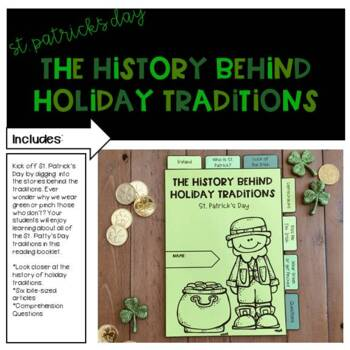
2. The History Behind the Holiday

If I am going to spend time focused on a holiday in my classroom, I want my students to know the ins-and-outs of that holiday. Where did it come from? Why do we celebrate? When did we start celebrating? Do other places around the world celebrate? If so, how? What are some traditions behind this holiday? It is the perfect link between social studies and reading. I like to use articles that answer these questions while I am in small groups. It is fun to hear the chatter from students about things they have learned that they did not know before. Sometimes I spend just one day on exanimating the holiday, while other years I spend the days before and after delving deep into it. Both work great, and it is really just personal preference that dictates how you approach this. 

I didn't really find much out there, as far as reading passages, so I have created some of my own for St. Patrick's Day and also other holidays. I like to link my passages to other content areas as well, if possible. It is easy to tie in writing, and sometimes even science or math. 


3. Center Games

It is easy to find center games for every holiday. Math is a great place to start. I enjoy making little games that practice important skills and are themed for the holiday. One of the most important skills that I teach is multiplication. If I can gamify it, the students are all over it. They love playing games that help them learn their facts vs. just sitting with a stack of multiplication cards. It just makes it more fun. 

So any time you can throw in some games to solidify those math skills, do it. You will not regret it. And your kids will thank you for it. 


4. Amazing Race Games

One idea that I LOVED a few years back was when I created an Amazing Race style game. It was so fun to watch the students race through different challenges, all themed around St. Patrick's day. My race included math and writing ideas. The race began with a fact sort. Students had to solve equations and sort them into St. Patrick's Day pots based on the answer to each equation. After that, each student received an envelope with directions for the next challenge. The next challenge was a game called Show Me the Money where each student had some coins with different amounts printed on them. They had to use coins to show the amounts in two different ways. Between each game, they received an envelope with instructions or special activities or treats. For activity number three, students were give a set of cards with different coins shown. They had to count each group of coins and organize them into a line showing the least to greatest amount, in order. Up next, we had a Punctuation Place activity where I gave students dry macaroni, dyed green and some strips with sentences that included dialogue written on them. Students had to use the macaroni and other pasta to correctly punctuate the sentences with commas, quotation marks, and periods. My final activity was for students to create a color poem. The poem used the five senses to talk about one certain color. I love how those turned out. 
5. Writing

Finally, it is always fun to include some writing in my holiday celebrations. I like to have students write in some way if I can find a way to tie it in. For St. Patrick's Day, it is fun to have students write a letter to someone telling them how lucky they feel to have them in their life. Then they actually deliver the letter to their friend or loved one. It makes their day.

Those are my five ideas for ways you can make the holiday special, while also keeping the learning level high. If you are interested in any of these activities, you can check out the resources I used below by clicking on the pictures. 


Monday, February 28, 2022

5 Reasons Why Classroom Transformations are so Effective

I love a good classroom theme or transformation. I have been doing them long before I knew they were a thing. Transformations in the classroom are powerful learning tools that can be highly engaging to students and they don't cost you a fortune either. Keep reading to see why classroom transformations are such an effective learning activity.


Classroom Transformations Equal Instant Engagement

When you change the environment in your classroom, there are a few things that happen. First, you can play to the novelty of it. Novel things are always more exciting. Shaking things up and throwing out something that is out of the ordinary gets kids' attention right away. They want to try something new. 

A classroom transformation also sparks their imagination. Let's face it. Most kids have wild imaginations. I don't care what you throw their way, give them a story line and a few details and they can run with it. Crinkle some paper and tack it to the wall, add some pool noodle dynamite, turn off the lights, and give them a tap light and they instantly buy into the idea they are geologists in an underground cave exploring for gemstones. Throw up a few vines, add some colorful paper to the desks and a couple of disposable pie pans, and play some jungle sounds and they will be excited about going on a dinosaur adventure through Jurassic Park. It doesn't even take a lot to transform a kid through their imagination. A colorful table cloth and a few hands-on activities will be enough to convince them they are chefs in a fraction bakery.

If you are excited, they will be too. So I say, play the part. Get them into it by being into it yourself. If you believe it, so will they. It takes part stage acting, part passion, and lots of imagination. 


It's all About the Content

The content behind a transformation is key. You want to take advantage of their excitement by going more in-depth than they would normally go. You can pull more out of the students when they are highly engaged. There's something about it that opens up the pathways to learning. They will give 110% because they are so excited about everything around them. You have to channel that energy into their work and you will be sure to get more effort than you ever have before. 

Content needs to be rigorous. We don't just do classroom transformations for the fun (yes, they are that), but we do them for the learning experiences they create. Whenever you have a topic that kids particularly struggle with or find boring, try finding a way to bring it to life in a transformation. It will help the kids get more excited about the topic and they will be ready to learn.


Memories

Classroom transformations create lasting memories for the students. Seriously, students remember these moments. They do not talk about their favorite worksheet moment. They probably won't remember those worksheets a month from now, but engaging the senses through a classroom transformation causes lasting memories that students remember years from now. I have had many students say to me (years after they have left my classroom), "remember when we..." They remember. They enjoyed it then and they enjoy remembering back to their experiences. 


Excitement

Classroom transformations excite not only your class, but those around the entire school.   Show up in a costume and random students will want to know what you are up to. Students will hear, through the school grapevine, about your transformation. I have had younger students in my school see all the things we do and come up to me to tell me, "I can't wait until I am in your class and we can go to Jurassic Park, or have a glow day, etc." It matters to kids. Don't we want them to have a love for learning? If we can create experiences that get them excited them about being in school, we have won. Parents tell me that when their kid knows there is a special transformation the next day, they come home excited and talking about it and ready to get to school the next morning...even reluctant learners.

Our school has about six or seven half days throughout the year...with teacher trainings in the afternoons. One thing that always bothered me was that parents seem to think half days don't matter. To combat that, I decided to go after the children. I wanted to create these fun classroom transformation days on half days to increase student attendance. It worked. Students that normally skipped those days were more likely to show up. We had fewer absences. And you can bet that if a student missed a transformation, they were not happy and tried to convince their parent to bring them next time. I call that a win!


Classroom Transformations Help me Fall in Love with Teaching Again

We all know teaching is hard...really hard, and getting harder, especially since Covid hit. Classroom transformations bring me back to the love of my career. I can have fun creating an experience for my students. Seeing them love what they are learning helps me love teaching even more. 

So why not try a transformation for yourself. You can start very small, or go big right away...it doesn't even matter. What matters is building a love a learning in your students. If you can do that, who knows how far they will go.