Tuesday, October 10, 2023

Five Engaging Ways to Practice Multiplication Math Facts

Do you ever imagine how life would be different if students actually WANTED to practice their math skills? What would motivate a student to learn their times tables? Mastering multiplication facts does not have to be a chore. It does not have to be boring! I am about to show you my favorite tips for getting those math facts stuck in your students' heads without coercion, threats, or begging. 

Gamify your Multiplication Facts

Nothing gets students more excited in class than actually getting to play. Sometimes students don't even realize they are learning or practicing when they are having fun doing it. Bring in the games. Let your students play with numbers. Play takes the heat off of them. It allows students to explore numbers in an engaging way. Games bring in competition and motivate students to get better so they can do better in whatever game they are playing. Playing multiplication games, or any academic game, allows students to build relationships with other students in the classroom as well. It's like the old adage, the family that plays together, stays together. Well, the same can be true for the classroom. Students will look forward to spending that time together, even if they are learning. They are interacting and having a great time learning all their facts. 


I always get a chuckle out of my students when I hear them say, today was so fun, all we did was play. Well, it may have felt like all they did was play, but it was very real and important work. Play, after all, is the work of childhood. 


Practice your Multiplication Facts

There's no getting away from it, a student who wants to learn his or her multiplication tables needs to put in the practice. Practice can look different, but students will need consistent practice.  Practice can take many forms, even as mentioned above, in the form of games. Here are some ways I love to have my students practice.

  • Multiplication Games: This has already been stated, but it is worth saying again...students love games. If a child can practice in an engaging and fun way, DO IT! I have made tons of games over the year from War to Connect 4, from different themed games for every month, to my Spy Academy Games...I can easily keep my students engaged and set up with games. 


  • Times Tables Partner Fluency Practice: Practicing with a partner always makes it more fun. In this practice, I like to allow one student to be the teacher, and the other becomes the student. Everyone likes to play the role of teacher and this activity capitalizes on that! I give the "student" a list of facts, without the answers, to a certain set. The "teacher" has the same list, except it has answers also listed. The student begins with a one minute timer, reading off his/her facts, one at a time and telling the answer. The teacher watches the answer key. If the student gets an answer wrong or doesn't know it, the teacher will tell them the whole fact, including the answer. The student must then stop, read the fact and answer three times, and then continue on through the list. The student will continue reading and rereading the list as many times as possible before they run out of time on the one-minute timer. 

  • Kinesthetic Fact Practice: Kids were not made to sit still, and fact practice does not have to be another seat-bound time of the day. Using simple decks of multiplication facts, here are a couple of suggestions to bring the movement into your math class. First, try the game around the world. All students stand. Two students stand side-by-side. One fact is read by the teacher. The first two student try be the fist to answer the question. The first to answer, moves on to stand by the next student. The other student is out and must sit back down.  Play continues until one player, the winner, is left. Second, try this fun game. Students are divided into two groups. Have both groups line up on one side of a play area or gym. The other side of the play area or gym has math fact cards. The teacher will stand in the middle. On "Go!" one student from each team will race to the other side of the play area, grab a fact card and go to the middle to read and answer it. If he/she gets it correct, he/she keeps the card and tags the next person in line, who runs after a fact card. If the student answers incorrectly or doesn't know the answer, he/she goes back to his/her team and consults with them. Once he/she has the answer, he/she will go back to the teacher to share the correct answer before tagging the next player on the team. The team who answers all their cards first wins. 

  • Speed Drills for Math Facts: I know what you are thinking....not every kid likes speed drills. You would be 100% correct in saying that, but as a teacher, I want to bring a variety of methods for practicing math facts, and speed drills can pack a powerful punch. I do not leave them out. Many students do love the thrill of trying to beat that one minute timer. They like tracking their progress from day to day. They like completing different levels. It feels like a game to many students. This is a powerful way to help students learn automaticity, which they will need to have when moving into higher math levels. Don't skip these. They still have value. 

  • Fact Card Practice for Multiplication: Admittedly, I do not use these as frequently as some of the other options, but I do love fact cards for sending home. Many times, parents do not have the training to come up with fun games and activities, yet they need a way to practice with their children. Fact cards are an easy answer to what you can send home for student practice. Fact cards can be basic, like a flash card that you simply drill someone with. Fact cards can be more fun like when using the kinesthetic pat-down cards. These cards have students tapping and crossing the midline. The movement helps to stimulate another area in the brain for higher engagement and retention of facts. There is definitely a place for fact cards in your plans for memorizing the times tables.

Make Time for Committing your Multiplication Facts to Memory

It will take some time and effort, but students do have the ability to master their facts. It will take a bit of time. I usually allow a few minutes (maybe 5) at the start of class to practice the facts in some way. I always do a speed drill, but if time allows, another quick activity is nice to use as well. While I am working in small groups, I also like to use my math centers to rotate students through games and other activities that will force them to practice their times tables. I do 3 rotations for math, when I am meeting with another group, students have certain things they are required to do. Practicing math facts for multiplication is one of them.   I have many different games for students to choose from. Students can also work on other activities as well. Some days I may assign a certain activity. Other days  I let students have complete autonomy. 


In conclusion:

Students need practice to learn their times tables, and lots of it. Make it enjoyable whenever possible. Allow students to work with friends. Set up game choices. Make it a team effort between school and home. Give students options so they feel that they have some say over their learning. Stick with it, your students will learn their facts if you are consistent and allow them the time they need to practice.


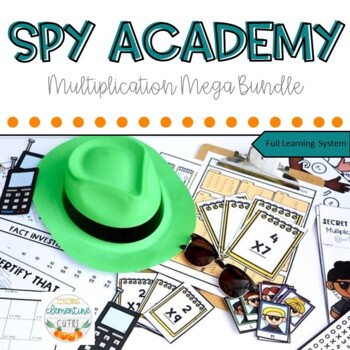
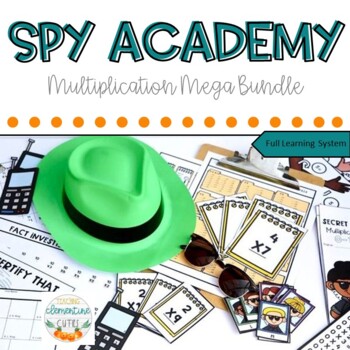
I have spent many years creating all sorts of math games specifically for multiplication. I even created a Spy Academy Multiplication themed bundle that has everything you need to help your students practice. 

There are lots of ideas you can use up above, but if you need help with games or activities, I can help you out with that. These games and bundles can save you a lot of time. They are pre-done for you. It makes it so easy to get set up and started. Check out some of these links below to  purchase. 


Thursday, October 5, 2023

Glow Day Meets Multiplication Spy Academy


Today was absolutely magical. I felt it before the first student entered my classroom. I had stayed a few minutes late yesterday afternoon to do a quick transformation of my room. It is one of my favorite go-to transformations through the years and always packs a powerful punch with engagement. I switch it up every year, which is a necessity since I work in a multi-grade classroom with three-four different grade levels. I have the same kids for at least three years, with a few new ones coming in. I love to keep the familiarity...they LOOK forward to it and are always asking when we will do it. I love the newness, because it keeps it from being the same old, same old from year to year for returning students.

Set the Stage to Engage


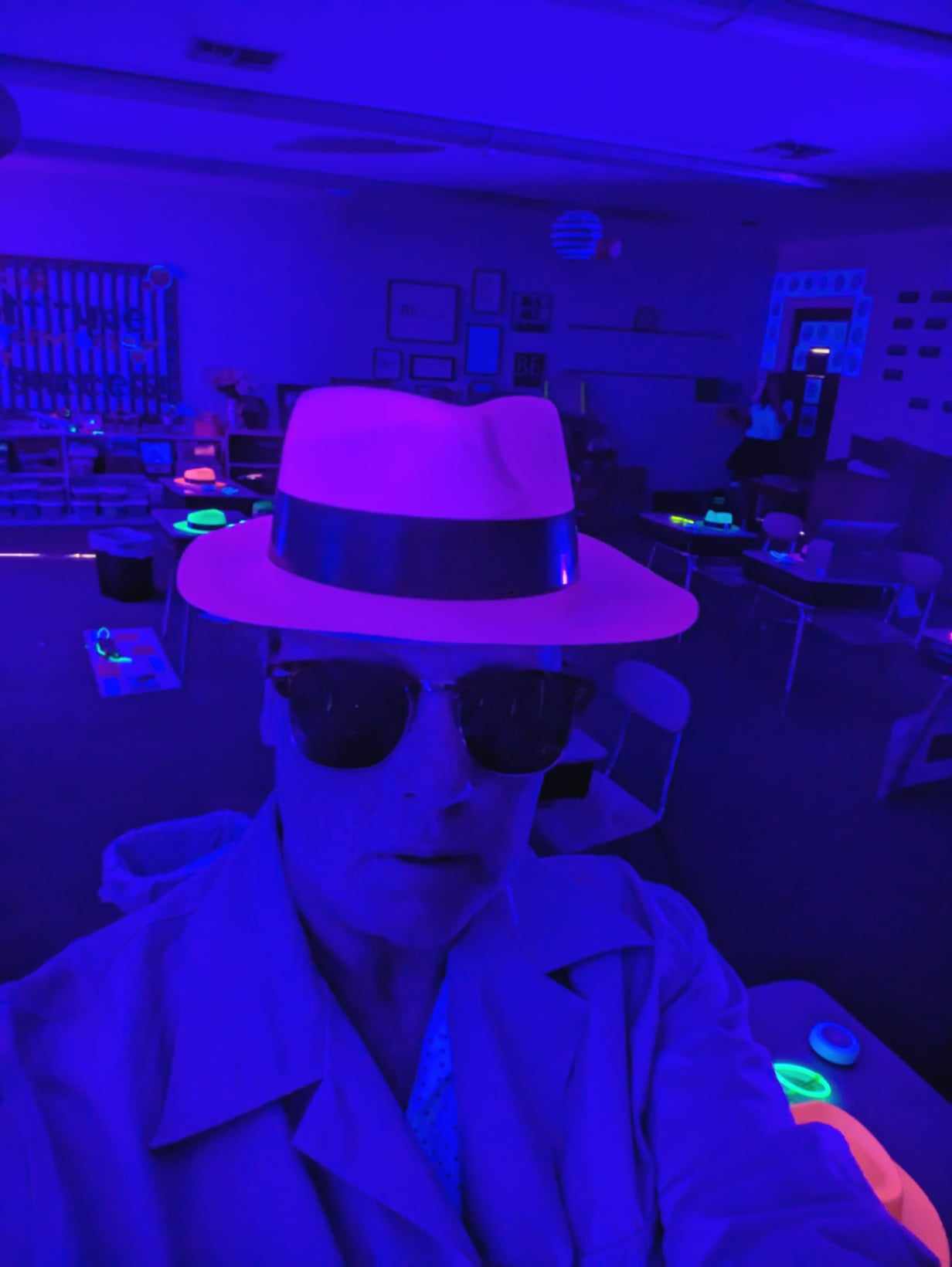
Let me describe the classroom scene for you. Think Spy Academy....I purchased a roll of black plastic to cover my windows and glass door, blocking out virtually all light. I plugged in my three strip black lights. I have used these for many years, so the $60 investment has been more than worth it. I added a neon spy hat and tap light (from Dollar Tree) to every desk. I use these from year-to-year and I believe I am on year 4-5 of using them. I also laid out a pair of glow glasses for each student. I got these in the Walmart party section. They came in packs of I believe four. I keep these to use from year-to- year and just change out the old glow sticks. Students always ask to keep the hats, lights, and glasses, and I always gently explain that I need these for other classes to enjoy. I do let them take the glow sticks at the end of the day. The whole set-up takes maybe 30-45 minutes, so it really is not a big investment to set the stage to engage my learners.

When I opened the door in full spy getup, students freak out. I downloaded an app and have them scan their finger for their day at our Multiplication Spy Academy. They get nervous to see if their fingerprints are accepted, but they have huge smiles on their faces as they enter the darkened classroom, glowing with pops of neon color. Students quickly put on their hats and glasses, tap on their lights and excitedly chat with friends while waiting to get started.

store post

For math, we did multiplication mania to launch our Multiplication Spy Academy. Spy Academy is a system I use to teach my students the multiplication tables, one set at a time. It is all around a spy theme, and starting with a spy themed glow day is just the thing to get them all excited about the learning they will be doing over the next weeks. If done well, students can learn the times tables in about 12 weeks...more about that in a minute.

Glow Day Meets Multiplication Spy Academy


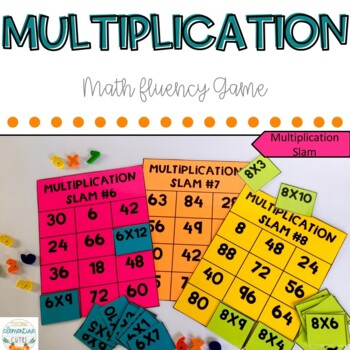
Today, I started with one of my multiplication games called slam. I handed each student a game board featuring a certain multiplication product from one of the sets from 1-12. Each desk had a different set. Along side each gameboard was a set of cards with multiplication facts for that set. I set a timer for one minute. Students were to lay the fact cards on top of the matching product as fast as they could. They were given one minute. Any student that completed their board slapped their desk, showing they were done. Students who were new to the multiplication tables were given a multiplication table chart to help them along. We rotated around the room, moving from desk to desk. By the end of the game, each student had been exposed to each of the facts.

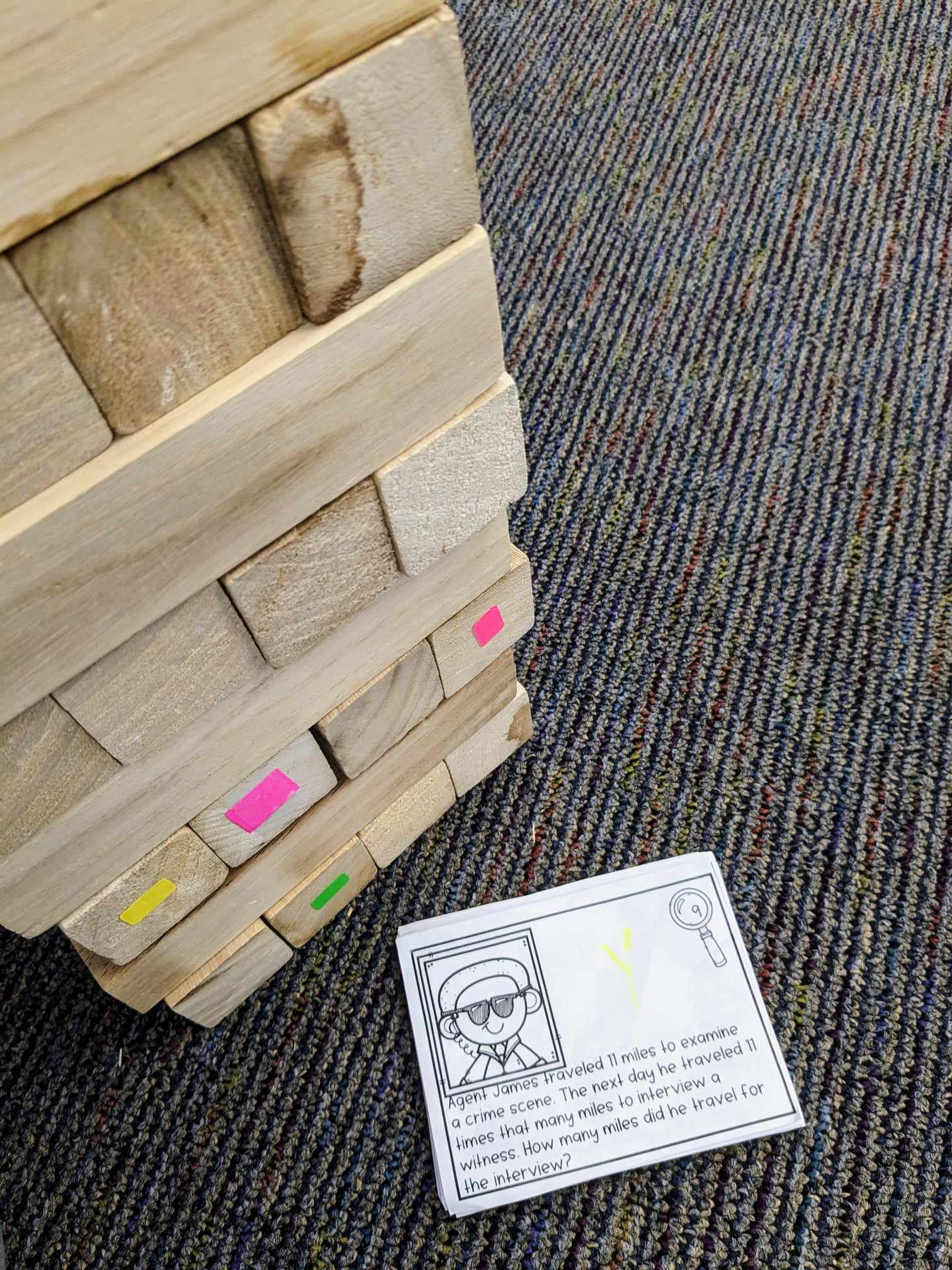
Afterwards, we rotated through 4 different game stations using some of my multiplication games. One station featured Spy Academy word problems along with a Jenga game. When students answered a question correctly, they pulled a certain color of Jenga block out and placed it up on top of the pile. Whoever knocked the tower down lost the game. They had so much fun with this one, always loving the loud crash.

store post

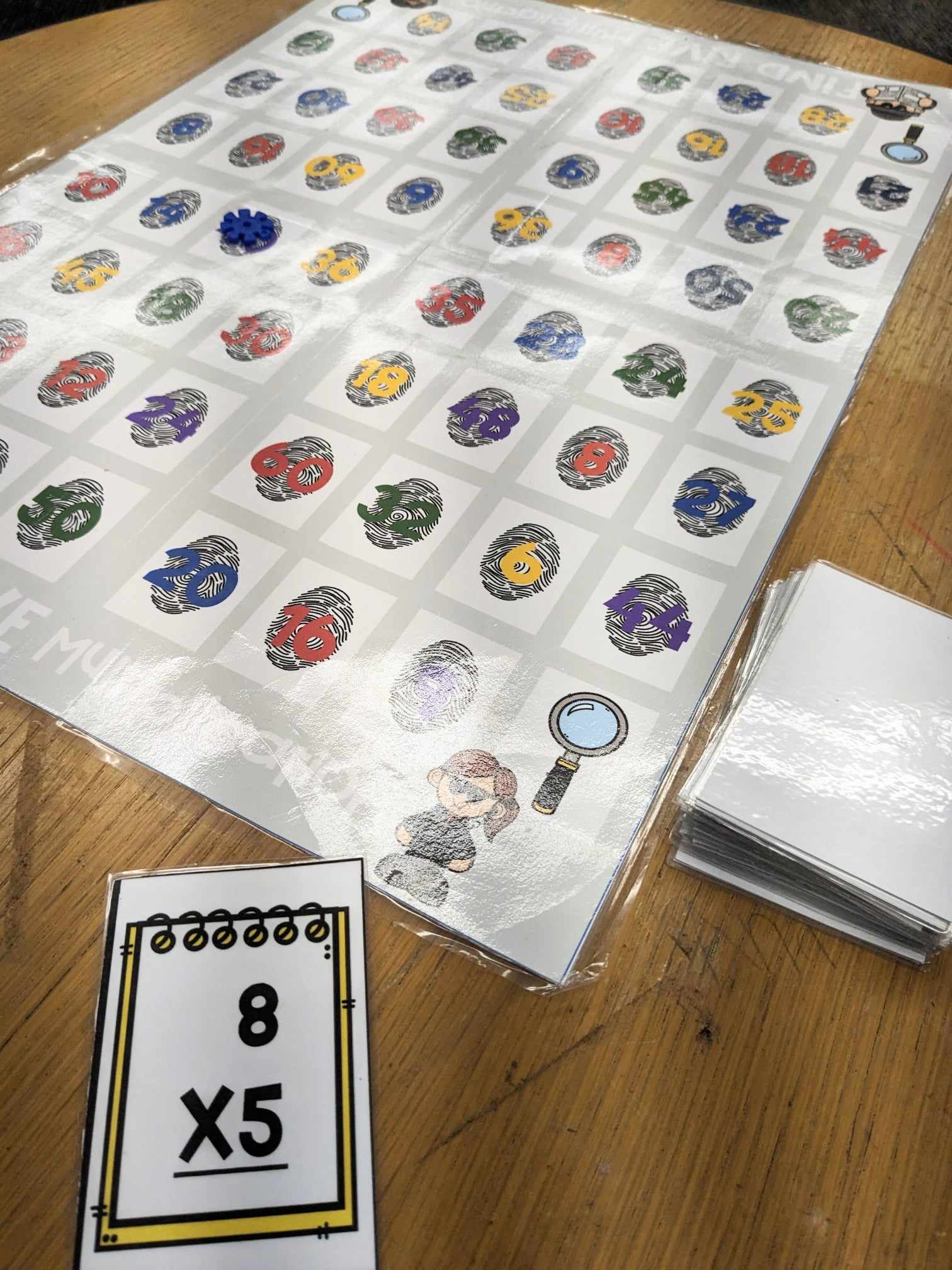
The next game was another Spy Academy favorite called Find Five. Students are given multiplication cards, their are also a few special cards that act as a wild...lay down a chip anywhere on the board, or remove one opponents chip. Students play on a large board covered with fingerprints and multiplication products. On their turn they examine their cards, choose one, find the answer on the board, and cover their spot. Whoever gets five in a row first wins.

store post

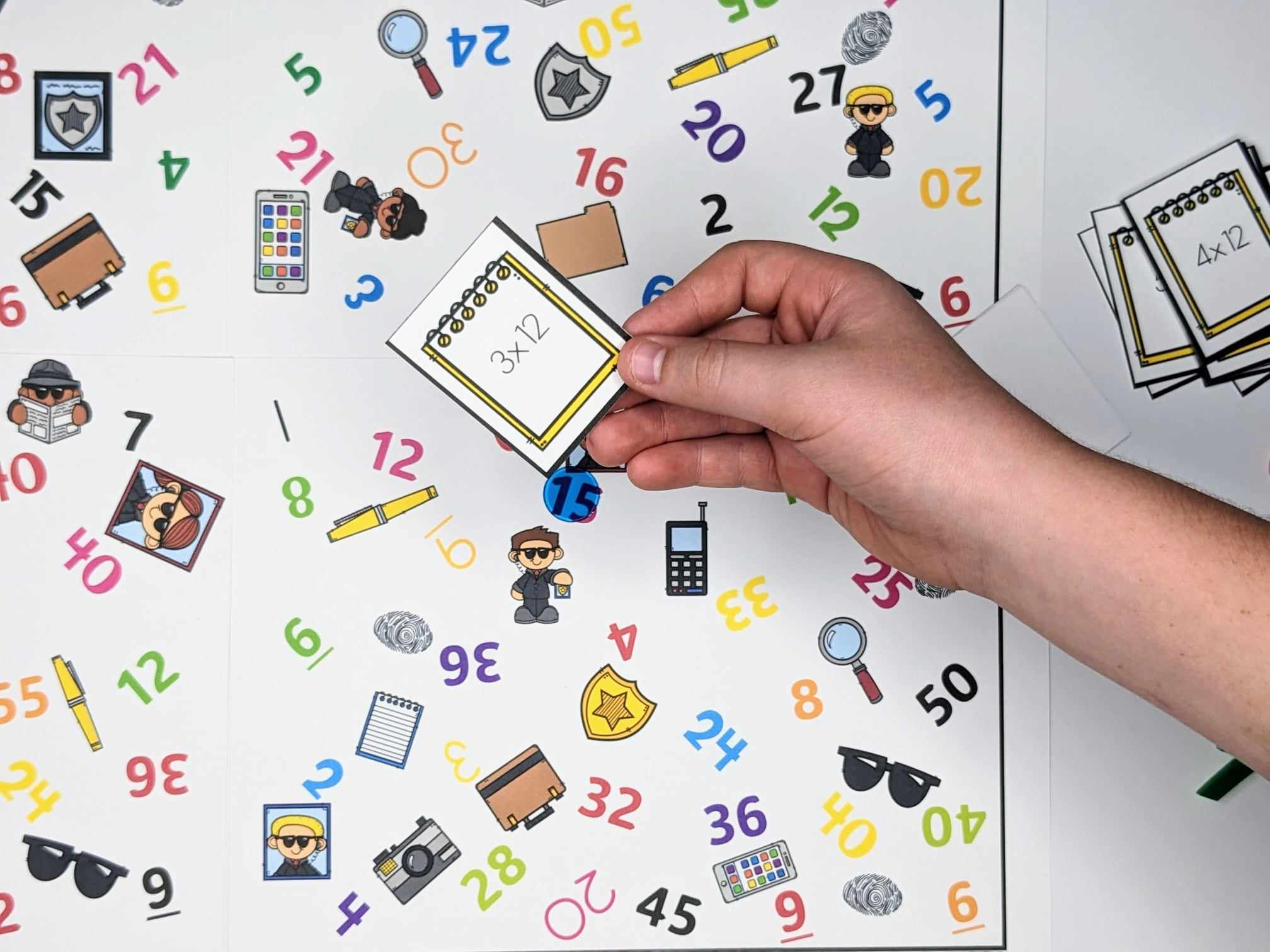
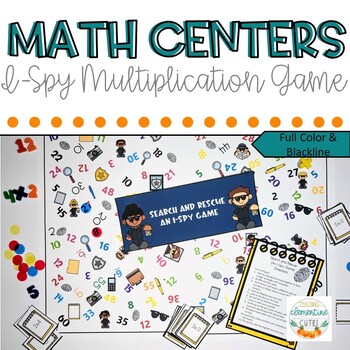
For the next game, we played the Spy Academy game called Search and Rescue I-Spy. It is an I-spy style game where students lay down a game board covered in colorful multiplication products and spy-themed clipart. Students take turns turning over a card showing a multiplication fact. All students look for the product on the board. The first to find it, shouts it out and covers it with their chip. Whoever is first to cover it wins the game. It it such a fast-paced, all-hands-on-deck game. I just love this new one!

store post

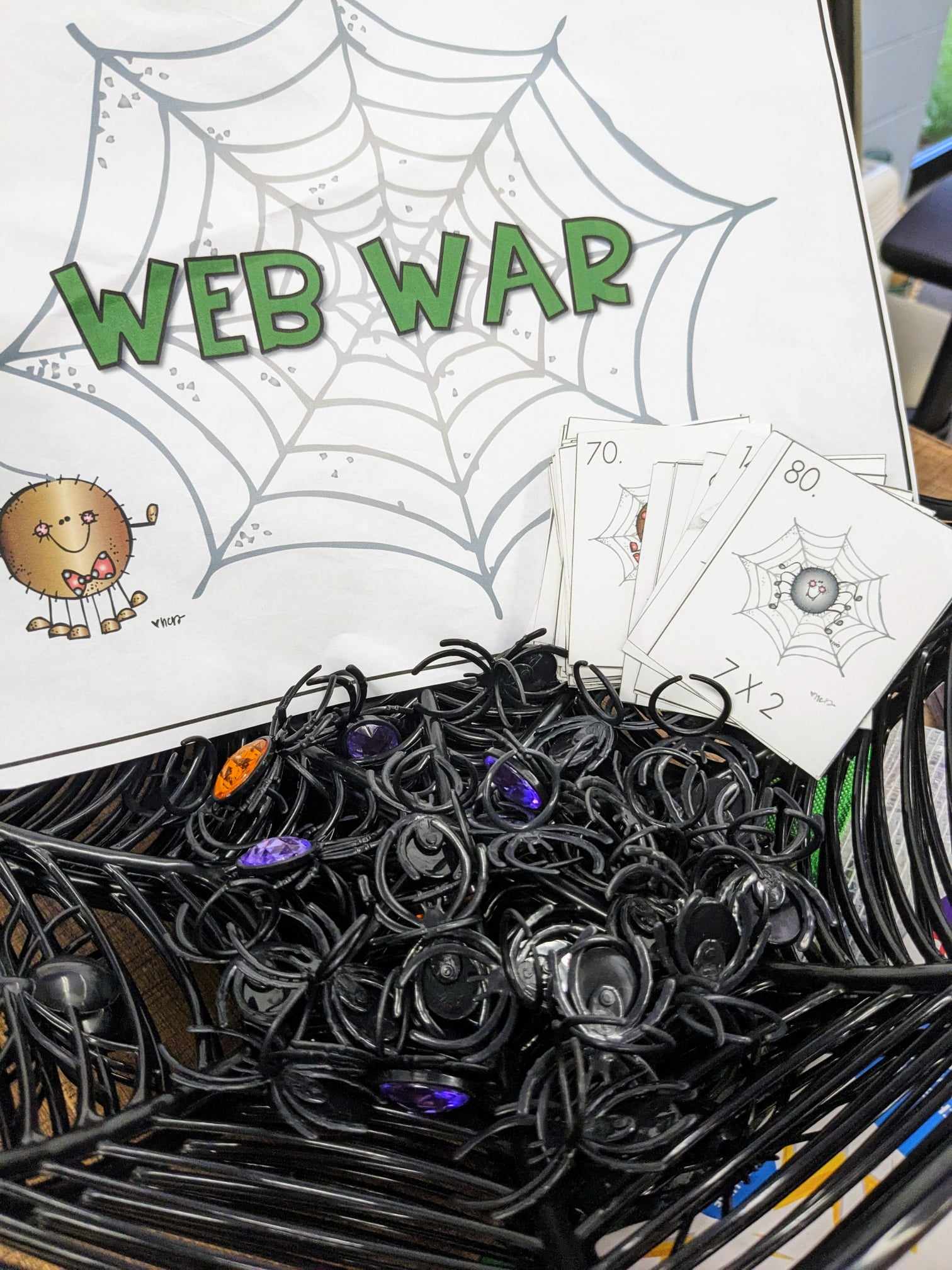
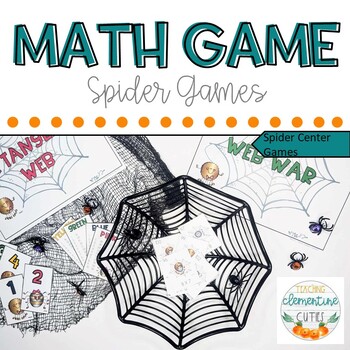
Our last game was not spy themed, but it was spider themed and since we are currently reading Charlotte's Web, I thought it would be a great add on. It is called Web Wars. It is a war style card game. Each student has a stack of cards. Each player flips the top one over at the same time. They each solve the Multiplication problem on their card and whoever has the highest amount collects a spider. We used spider rings and spider web candy dishes from Dollar Tree for this game. Students placed any spiders they earned in their web bowl. The one who collected five spiders first won the game.

store post

These games were such a fun way to kick off our Multiplication Spy Academy. Now tomorrow we will receive our Spy Academy challenges. We typically take about 12 weeks, plus a few for mixed review, to master our multiplication facts. I will give each student a fingerprint card. These are similar to what they use when the book criminals or when you get fingerprinted for a job. As students master a certain fact, they add that fingerprint to the card. They will also receive a special detective collector's card. Each card features a detective from Spy Academy and has a letter from a secret code. The code will only be solved when students earn all of the collector's cards by learning their multiplication facts from 0-12. Their are a lot of activities that I can use to help students with learning their facts and I created this system to help them be more successful while having fun with a spy-theme. I considered different learning styles in the making of this. We have kinesthetic ways to practice. There are interpersonal practice challenges. I have verbal drills as well. There are speed drills. There are cards to practice alone. There are games. There is so much that I try to incorporate that it is hard for a student not to succeed. Practicing everyday is also imperative to success. I ask parents to practice at home and try to send home tools to help them do this.

store post

Spy Academy

It's a big task for third grade, but it makes such a difference in the successes they have in math moving forward. Those who do not have a solid grasp of the times tables, will continue to struggle. It is just a fact...it slows students down. I know that there are different views currently about whether you should or should not have students memorize the facts, but I see the difference when they do, it is still important and worth while. I can still build understanding about the concept of multiplication while holding my students to the high standard of mastery of facts.

If you are interested in any of the activities I mentioned or Spy Academy, be sure to click here or check them out below.

store post

store post

store post

store post

You might also be interested in this fun coupon book for your students this fall. Spread a little love and let them know you appreciate their hard work this first quarter. It is filled with fun coupons for classroom privileges that are super cheap, but most are free.

store post


Monday, October 2, 2023

Setting up my Classroom Library

Why do I Need over 1000 Classroom Books?

Having a wide variety and large selection of books is a must for me. Students need to be able to choose books that interest them. They need to have many to choose from, not just a small bin or two for an entire classroom. Having a large variety gets them excited about books. It helps them to be more interested in books. Research shows that students who attend school in a classroom with a well-stocked library of quality books actually read 50% more than students who do not. That is a LOT! Having more books provides students. A great classroom library can benefit students by providing motivation and interest in books. We want to help students become life-long readers and this is one way to help students reach that goal.


Where I shop for Books 

I am constantly adding new books to my classroom library. I love the excitement I see when kids get their hands on new books. There is a buzz in the classroom as everyone eyes a book with an interesting cover that they want to check out. I hear students ask the lucky kid who got the book they wanted if they can have that book next. 

So, where do I find these new books, and how can I afford to add so many to my classroom? I am lucky to have a Goodwill bookstore in my town. It is in entire house, filled with books of all kinds. It has a large children's section and every weekend the books are on sale for 25% off! They are constantly getting new books and I can get so many when I head there. I donate these books to my classroom, but I do write my name in them since I purchase them with my own money. I have no plans to leave my school, but if I ever do, I would definitely take these books with me.

I suggest that you get books at thrift stores and garage sales. I can pick up books for usually between $1.99 and $3.99 plus get the 25% off. These books would regularly retail for between $5.99 and $17 or so. It is really a great deal. Also, don't be afraid to ask or put out a post on social media for people to donate their old books to you for your classroom. I have had parents over the years who wanted to clear out unused books donate to me...and I always say yes to that!

How I Organize my Classroom Library

I admit it, organizing my classroom library was not a quick or easy task, but once I got it organized, it was a cinch to maintain. I have used this method with kids from 2nd grade all the way through 6th and if you train them right, and keep high expectations of them, it is so easy to have a clean and organized library all year, and even for years to come. Here's my steps for getting started.

1. First, find some bins to use. Bins not only allow you to hold more books on the shelf, but it also allows you to easily sort books into categories. Bins also turn books so that students can quickly thumb through them, looking directly at the front of the cover and not the spines. 

Bins do not have to be costly at all. I have two types of bins in my library currently and neither cost much money. The first type I picked up at Walmart. They are the shoebox bins. These usually come in sets of 6 for a discount. I like these bins for chapter books, they are just a perfect size to line chapter books up in and you can store so many in just one bin. The other type I have are dishpan bins. These are larger and they are great to use for picture books that are too big to fit in the shoebox bins. If the books are too large to stack facing out, I do turn them sideways to allow them to fit better. 

Sometimes I get these bins for free when people are getting rid of their storage bins. 

2. Next, I dump all my books out in a large area and start sorting. This is the messiest part and definitely takes the longest, but it is so worth it in the long run. I look at my books and the types of books I have. I start placing books that fit together in stacks. Sometimes I have a ton of books by one author, like Andrew Clements for instance. My students LOVE his books and I have purchased so many over the years. Sometimes I have many books about a certain topic such as the Titanic. We did an in-depth study of the Titanic a couple of years ago and the students became OBSESSED. So whenever I go to the bookstore and see a new book about the Titanic, I pick it up. With all those Titanic books, they needed their own space in my classroom library. I even have books series that obviously belong together. I have space for my Junie B. Jones, American Girl, Childhood of Famous Americans, Ready Freddy, Flat Stanley, Who Was, I Survived, Babysitter Club comics and many more series books. If kids love a series, I keep purchasing them when I see more books in the set. 

If a book does not seem to fit any specific category, then I will use subject area or genre. For instance, I have a category for fiction and biography. I also have a category for science and Bible (since I teach in a Christian school). 

3. Once the HUGE task of sorting is complete, I give each category a name and a number. I start with the number one and continue through the numbers until every category has a number. I purchase little sticker squares, they come in packs at Walmart for just a few dollars. I count how many books I have in a specific category and then I write the category number on that many stickers. I place the number sticker inside the front cover of the book. I continue adding stickers with numbers to the inside cover of every book. As I finish with a category, I place it inside a book bin. 

4. When all the books are in bins, I create tags for the outside of the bins. The tag will show the category and the number of all the books inside. For example it may say Fiction 1 or Biography 3. Many times, I add clipart to my bins to match my classroom theme. I currently have emoji's on my bin labels. I use a plastic pocket sticker on the front of each bin and slide my labels inside. I always pick up extra pocket stickers from the dollar spot at Target during back-to-school time. 


Training the Students to Use the the Classroom Library

During the beginning of the school year, I train the students to use the classroom library. I take time to show them how the books and bins are numbered. I tell them that when they are done with a book, they should place it back according to the number listed on the outside of the bin and inside of the book. I show them how to do this. We talk about the correct way to place the book inside a bin...front cover showing and right side up. I hold them to this. They are not allowed to just dump their books and walk away or put them haphazardly in a bin. Sometimes this takes some reminding and remodeling, but they can and will learn to do it. 


Student Book Bins

Each student in my class receives a book bin with their name on it. I use durable plastic ones. I have had the exact same ones for probably 5-6 years and they are still in good shape. I recommend purchasing ones that are sturdy, not ones from places like Dollar Tree where the size and quality will suffer. I think I originally spent about 60 dollars for 24 bins. I use magazine-style book bins. I also place a plastic pocket on the front of each and slide in the student name. 

We talk about how many books they are allowed to have at a time (5) and how to care for the books by not dog-earing the pages, but instead using a book mark or scrap of paper. 

Students care for their book bin and are asked to keep only books and headphones for reading online inside their bins.


Library Goals

It is a goal for me to have a self-running library with a wide variety of reading materials. I want my students to fall in love with reading and become life-long readers. I will do whatever I can to make my classroom library a place of joy to explore. Being organized, giving students choice, and making the process easy for them are all ways that I go about achieving that goal. 

Setting up your library will take some time, but once you have it, you will save so much time in the long run. I love that I do not have to reshelf books or help students with checking them out. Our library is a well-oiled machine!


If you are looking for editable tags for your classroom library, I have a set you may be interested in in my TPT shop. You can click on the picture below to be taken to the product.


Wednesday, August 30, 2023

My Newly Found Classroom Management Tip

If you are anything like me, when students need help, it is usually several students at the same time. The line beside my desk can grow quite long and surprisingly noisy and a bit fidgety. I was always getting frustrated trying to keep that line...well... in line (bad joke, I know). But seriously, it was very frustrating trying to manage the line, keep students working, and still have time to help students one on one. 

Last year, I discovered a magical way to solve this whole issue and it has been wonderful. OK, it isn't really magic, but it sure feels like it, because it has completely changed how my classroom manages themselves, allowing me to help students in peace. 

What is a Teacher Waiting Room

Let me introduce you to the Teacher Waiting Room.  I know, it sounds super official doesn't it? It is truly as great as it sounds. I created a set of tags. Last year I used clothespins and a bin with my tags. This year I stuck magnets on the back and have them on the whiteboard. Both work just about as well as the other. 


How to Use a Teacher Waiting Room

Using a teacher waiting room is simple. Instead of allowing your students to form a line for help, you will have them take the first available number instead. Students will then return to their seats and work on something else that they do not need help with until it is their turn. Students will work quietly, allowing you to quickly help other students. 

When I am ready to call a student for help, I simply call out their numbers in order, one at a time. Once their number is called, they will return their number, then they will come to see me for help. I will continue calling numbers as needed. 


My Teacher Waiting Room has Saved my Sanity

Now, instead of experiencing chaos, helping students is easy and they know exactly what to do and how to do it. It has turned a burden into a joy. I will never go back. This truly is the best thing since sliced bread! 


Friday, July 7, 2023

Back to School Activities

Back to school can feel like such a magical time in the classroom. From the perfectly cleaned classroom, to the decor reveal, to the activities you pour your heart into, the first week of school just can't be beat. Then there's the behavior...everyone is on their best and the classroom management is generally easier than at any other time throughout the school year. But how can we extend that magic throughout the year, starting on day one? I would say that there is one element that is extremely important in reaching that goal and that is team building, or as some call it, class building.

Team Building

The purpose behind team building is to get students working together, sharing ideas, and cooperating. These are some of the soft skills that we can teach throughout the year, starting from day one. Many companies will be looking to hire people with these skills, so even though it is not a part of your standard curriculum, it is important to teach along side the regular lessons. Team building gives students ways to interact, take turns, empathy, disagree respectfully, and compromise. It helps students learn problem solving skills, because, let's face it, if there is more than one person working on the same activity, a problem could arise. And it often does. Students need to learn how to work with people who are not always easy. They need to learn to do so in a positive way that helps deesculate the probelm. 

Team Building Activities

With back-to-school season nearing, and stores putting out school supplies, it is definitely time to start thinking about how you will  bring the important skills that go along with team building into your classroom. One great way to do it is through activities. From get-to-know-you activities, to team challenges and games, your students are sure to love these. Let me show you a few that I will be using when school gets back in session this year. Some are completely new and others are old favorites. 


Back-to-School Team Buildling: Dice Convos


In this super simple activity, students are divided up into groups and are given a question board and two dice. Students take turns rolling the dice and finding one of the questions that line up to their numbers on the dice (this works like a coordinate grid). The student will read and answer the question then pass the dice to the next child. The activity continues with another student rolling, finding a question, answering it, and then passing to the next student. The teacher should set a timer for 5-10 minutes to allow enough conversation, but not let it continue on too long. 

The great thing about this activity is that it gives everyone a chance to share. Questions are quick and easy. It is in a small group, so it is less threatening. Students will get to learn more about their classmates. 

Back-to-School Team Buildling: Roll-N-Talk


This is a digital activity that can be projected on a smart board, or something similar. Students will be placed in small groups. Each student will need a die. In this PowerPoint slide show, students will see different slides with 6 questions on each. Each time a slide is shown, everyone in the group will roll their die. Taking turns, students will go around reading and answering the number of the question that corresponds to the number they rolled. You can do as many rounds as you like, or break it up over more than one day or time. 

What I like about this is that it is an activity that keeps things moving quickly. You can allow just 2-3 minutes (maybe less) between each slide change. Every student will have a voice and share something about themselves. Students will get to know the other students in their group a little better.

Back-to-School Team Buildling: Making Connections


This is a new activity. I am excited to bring it to my class this year! Each group of 2-4 students will receive a template with rectangles and a circle they will also receive a list of statements. As a group, they will read through the statements to see who (in the group) they describe. If all members of the group relate to that statement, they will write it in the middle, showing a commonality. They will continue through the entire list. Once all the commonalities are written, students will each write some differences (from the list) in one of the individual rectangles. 

Once everyone has filled in their rectangle, students will receive a small paper. On the paper, they will write the name of one of the teammates (make sure everyone chooses someone different so all members are chosen). Each person will then write that teammate's name and draw/color a portrait of them. The paper will be cut out and glued next to the teammates description on the side of the poster. 

This creates a super cute display that students can look at to learn more about their other classmates as well. 

What I like about this is that it includes an art aspect. I love that students will learn things they have in common with others in the class, as well as things that are unique to them. I really like that students are working together to create a product, a poster. This is a great way to strike up new friendships, because often we look for people with whom we have things in common. 

Back-to-School Team Buildling: This or That


This is a forced choice activity that will get students up and moving. In this PowerPoint slide show, you will go through different slides. Each slide has two choices...one on the left and on on the right side of the slide. Students will decide which side best describes them. They will move to that side. You can have students share with a partner why they chose that side and also have a few share aloud if you want. There are extension ideas included in this activity as well. 

What I love this is that right away you can see another student who has something in common with you. I like that this is a quick and easy activity that can be extended through converstaion or left as is. It also has extension ideas for a writing activity that can link back to this. 


Back-to-School Team Buildling: Four Corners


In Four corners, students will be placed in groups. They will move from corner to corner reading the question in the corner and answering it. 

This is a great way for students to get to know each other and share without having to share in a whole class situation, which can be scary, especially during the first days of school. I also like that this activity gets some movement in. Students are out of their chairs and get to move around the room. 

Back-to-School Team Buildling: Art Challenge

This is one of my favorites to do at back-to-school time. Each group is given a bag of art supplies that must be used in a group art project (think the cooking show, Chopped Challenge). With the timer set, each group collaborates to create a project in the time allowed. Projects are presented and points are given based on teamwork, creativity, and other criteria. Three different rounds are played. This works best over the course of three days, since it is a more time consuming activity (about 30 minutes of work time). Once all three projects are scored, a winning team is announced!

I love this to gamify my classroom. Everyone loves a little competition. Getting students working and collaborating helps you see from the start who is a natural leader and which students may need additional help when working with others, etc. I always find this to be a very engaging activity. 

Back-to-School Team Buildling: Me Myselfie and I

This activity gives you three choices. You can print out an all about me page, paragraph about me, or, my favorite, two truths and a lie. I like the two truths and a lie activity best. It turns students into detectives in a fun game. Each student decorates the premade front cover, which is made to look like a Poloroid picture. Then inside they will write two truths and a lie, but mix up the order. One by one, students will read their truths and lies. It is great if the truths are a bit outlandish and the lie seems believable. The rest of the class votes on which statement is the lie. The student will then reveal whether or not the class was able to guess correctly. 

Once the activity is over, turn these into a fun bulletin board that says "Oh Snap! What a picture-perfect class!"

I love that this gamifies my classroom. I love the mystery aspect that has students trying to figure things out. I love that it gets students speaking outloud in class (but from their seats). It is a fun display to hang up. 

Team Building

I am looking forward to using each of these team building ideas over the back-to-school week. I cannot wait to guide students and help them learn about each other and themselves. I want to see them grow throughout the year in their collaboration skills and many others. This will be a great start. 

Be sure to click the link below or any of the pictures above to purchase this resource for your own class. These can be purchased as a bundle for $6 off the orginal price! You can also purchase separately.